Love language · words of affirmation
Words of affirmation as a love language
Words of affirmation is the love language of being told. If it is your top channel you register affection most strongly when someone says out loud what they noticed, what they value and what you mean to them, and you feel the absence of that sharply even when everything else in the relationship is being done well.
This channel is starved more often than any other, because the person who is not speaking usually believes the feeling is obvious.

Komel Kaur
Psychologist + Executive Coach
M.A. Psychology
CBT and DBT trained psychologist
5 languages
English, Hindi, Punjabi, Urdu, Kashmiri
60-minute sessions
Online video, times shown on your own clock
No payment to request
Ask for a time first, pay once it is confirmed
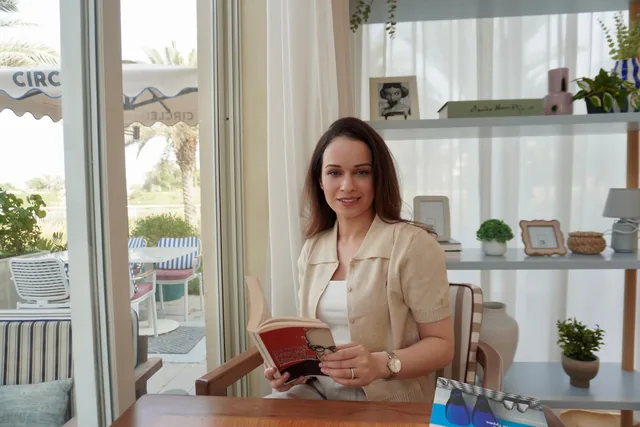
Reviewed by Komel Kaur, psychologist and executive coach, M.A. Psychology
Last reviewed 20 August 2026
Find your own ranking first
Free · 25 questions · all five ranked
Love language test
Scores words, quality time, gifts, acts of service and touch out of 20 each, so you see your lowest channel as well as your highest.
Take it free →Free · 24 questions · both dimensions scored
Attachment style quiz
Scores attachment anxiety and avoidance out of 48 each, then names the style they add up to and what it does under conflict.
Take it free →Free · 15 questions · you alone
Relationship doubt self-check
Scores satisfaction, doubt, repair after conflict, respect and loneliness. Instant result, no sign-up.
Take it free →The other four love languages
Start from the overview of all five love languages →
Taking it as a couple: how to compare two rankings →
When the pattern is deeper than channels: attachment styles →
Free · 15 questions · you alone
Relationship doubt self-check
Scores satisfaction, doubt, repair after conflict, respect and loneliness. Instant result, no sign-up.
Take the free check →USD 49 · both people answer
The two-sided couples tests
You each answer 44 questions privately, then get one joint report - attachment pairing, five dimensions side by side, and your three widest gaps.
Compare both tests →Love languages explain care that is given and not received. Where the issue is repair, respect or expectations that genuinely differ, the two-sided test measures those for both of you.
Read the methodology: which research each question comes from →
What it looks like when it is being met
- You are told specifically what you did, not generally that you are appreciated. Specific beats warm.
- Praise arrives unprompted rather than after you have asked whether everything is alright.
- You are spoken well of to other people, and it gets back to you.
- Disagreements stay about behaviour, because words that land also mean words that wound, and this channel is symmetrical.
What it looks like when it is starved
The commonest version is a relationship where everything is functioning and one person is quietly unsure they are wanted. Bills get paid, the house runs, sex may be fine, and still the question sits there because nobody has said anything in months.
It tends to show up as fishing rather than asking: rewording a story until it draws a compliment, checking whether you are annoyed, asking if the other person is still happy. That behaviour reads as insecurity to a partner who has no idea their silence is the input.
The other tell is disproportionate injury from throwaway criticism. If this is your channel, a passing remark about how you loaded the dishwasher can last a week, because the same wire carries both.
What to actually ask for
- One specific noticing a day, about something ordinary. Not a compliment about your appearance on a night out.
- Say the reason, not just the verdict: 'you handled that call well, you did not get pulled into it' rather than 'well done'.
- Written counts, and for some people it counts more. A message during the day is not a lesser version.
- Ask for repair in words too. If your partner apologises by making tea, say plainly that you also need to hear it.
How it collides with the other four
- With acts of service: they show love by fixing and doing. You experience a well-run household and no evidence you are loved. They experience constant effort and no credit.
- With quality time: closer, but silence is the risk. Long comfortable evenings together, nothing said, and one of you leaves the room unsure.
- With physical touch: affection arrives constantly and non-verbally, which is warm but does not answer the question this channel keeps asking.
- With receiving gifts: a gift is a statement, but an ambiguous one. A card with two written lines resolves that instantly, which is why the card matters more than the present here.
When distance, illness or a new baby changes it
Long distance raises this channel for almost everyone, because words are one of the few currencies that survive the removal of touch and shared time. If words are already your top language, distance is workable in a way it is not for a touch-led partner.
New parenthood does the opposite in practice: both people are exhausted, communication compresses into logistics, and months pass in which nothing is said that is not about the child. Naming that early, and agreeing on one deliberate sentence a day, prevents a slow drift that is very hard to explain afterwards.
Common questions
What does words of affirmation mean as a love language?
It means spoken and written acknowledgement is the channel through which affection registers for you. Being told what someone values about you, specifically and unprompted, does more than an equivalent amount of practical help, gifts or time, and its absence is felt as absence of love even when the rest of the relationship is working.
What are examples of words of affirmation?
Naming something specific your partner did and why it mattered, saying thank you for an invisible piece of effort, telling them what you find attractive about how they think, praising them to other people, sending a message midday for no reason, and saying out loud that you are still choosing this rather than assuming it is understood.
Why do words of affirmation people get hurt so easily?
Because the same channel carries both directions. If spoken words are the medium through which you register love, they are also the medium through which criticism lands hardest, and an offhand remark can outweigh a week of practical care. This is worth telling a partner explicitly, because to them the remark was minor.
My partner never compliments me. What do I do?
Make a specific, low-cost, repeatable request rather than raising it as a complaint about how they are. 'Tell me one thing you noticed at the end of the day' is something a person can actually do this week. 'Be more affectionate' is not, and it tends to turn into a recurring argument instead of a change.
Is words of affirmation the same as needing constant reassurance?
No, though they can look similar from the outside. Reassurance-seeking driven by attachment anxiety keeps rising no matter how much is given, because the question underneath is about safety rather than channel. If a partner's compliments never seem to settle anything for longer than an hour, the attachment style quiz is the more useful measure.
How it works
Three steps, about five minutes.
No waiting list, no phone tag, no chasing a reply. You can have a time requested before you close this page, and nothing is paid until it is confirmed.
01
Pick a session and a time
Choose the session you want and a slot that suits you. Times are shown on your own clock, and evening slots are open.
02
Request it, no payment yet
Leave a few details and send the request. The slot is held for you while Komel confirms she is the right fit.
03
Confirm and get your Meet link
Komel sends a payment link for that session. Once it is paid, the Google Meet link lands in your inbox.
Sessions and pricing
Pick the session that fits, then a time.
Full session
60 minutes
USD 70USD 49
Your first session. USD 70 for sessions after that.
New client offerOne-off, no commitment
A complete therapy hour, one to one.
Book this →
Most chosen5-session plan
60 minutes
USD 49per session
Same price every time.
Save 30% per sessionPaid upfront, covers all five sessions
Five hours of real work at the lower rate the whole way through.
Book this →
Couples session
60 minutes, for two
USD 120USD 99
Your first session. USD 120 for sessions after that.
New client offerOne-off, no commitment
One hour with both partners on the same video call.
Book this →
From the practice
What Komel writes about, week to week.
When this is not the right fit
Komel is a psychologist and executive coach based in the UAE, working online worldwide. Sessions are private and self-funded, and cannot be claimed on local insurance or used for legal, medical or workplace reports. She does not prescribe or manage medication.
This is not an emergency service. If you are in immediate danger, use a local crisis line rather than a booking request. Her credentials and training and the full scope of practice are published.