Love language · receiving gifts
Receiving gifts as a love language
Receiving gifts is the love language of evidence. It is very rarely about cost. What registers is proof that you were in someone's mind while you were not in the room, which is why a two-pound thing they saw and thought of you can outperform an expensive present chosen an hour before it was needed.
This is the most misread channel of the five, and the one people are most embarrassed to claim.

Komel Kaur
Psychologist + Executive Coach
M.A. Psychology
CBT and DBT trained psychologist
5 languages
English, Hindi, Punjabi, Urdu, Kashmiri
60-minute sessions
Online video, times shown on your own clock
No payment to request
Ask for a time first, pay once it is confirmed
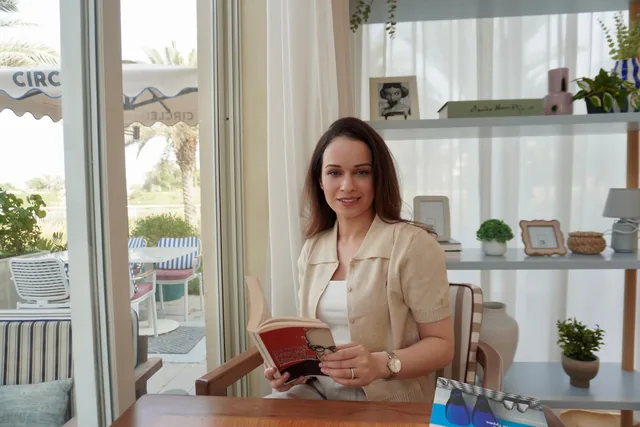
Reviewed by Komel Kaur, psychologist and executive coach, M.A. Psychology
Last reviewed 20 August 2026
Find your own ranking first
Free · 25 questions · all five ranked
Love language test
Scores words, quality time, gifts, acts of service and touch out of 20 each, so you see your lowest channel as well as your highest.
Take it free →Free · 24 questions · both dimensions scored
Attachment style quiz
Scores attachment anxiety and avoidance out of 48 each, then names the style they add up to and what it does under conflict.
Take it free →Free · 15 questions · you alone
Relationship doubt self-check
Scores satisfaction, doubt, repair after conflict, respect and loneliness. Instant result, no sign-up.
Take it free →The other four love languages
Start from the overview of all five love languages →
Taking it as a couple: how to compare two rankings →
When the pattern is deeper than channels: attachment styles →
Free · 15 questions · you alone
Relationship doubt self-check
Scores satisfaction, doubt, repair after conflict, respect and loneliness. Instant result, no sign-up.
Take the free check →USD 49 · both people answer
The two-sided couples tests
You each answer 44 questions privately, then get one joint report - attachment pairing, five dimensions side by side, and your three widest gaps.
Compare both tests →Love languages explain care that is given and not received. Where the issue is repair, respect or expectations that genuinely differ, the two-sided test measures those for both of you.
Read the methodology: which research each question comes from →
What it looks like when it is being met
- Objects that carry a reference: the snack you mentioned once, the book by the author you were arguing about.
- Things brought back from an ordinary trip, which is the clearest possible evidence of being thought about while apart.
- Occasions remembered without a reminder, and marked in some way even when money is tight.
- The keeping matters too. People with this channel tend to hold on to tickets, notes and small objects long after their use.
Why forgotten occasions hurt so much
Because the currency is evidence of being held in mind, a forgotten birthday or anniversary is not read as forgetfulness. It is read as evidence of the opposite thing. That is why the reaction so often looks disproportionate to a partner, who genuinely just lost track of the date.
The same logic explains why a last-minute expensive gift can land badly while a cheap and specific one lands well. The expensive version proves budget. The specific version proves attention, and attention is what is actually being measured.
This channel also carries the strongest social embarrassment, because it is widely mistaken for materialism. People often score it low on a test while behaving as though it is high, and it is worth checking your own result against what you have actually kept in a drawer.
What to actually ask for
- Say the cost ceiling out loud. It relieves a partner who has been avoiding the channel because they think it means spending.
- Ask for one small thing a month rather than a large thing at Christmas. Frequency is the signal here.
- Give them the raw material: mention what you liked, and let them use it three weeks later.
- If money is genuinely tight, ask for made or found rather than bought. Note, photograph, something picked up on a walk.
How it collides with the other four
- With acts of service: they show love with a full tank of petrol and a fixed shelf. Practical, invisible, and it leaves nothing behind to keep.
- With words of affirmation: they tell you and assume that covers it. Words are the cheapest evidence to produce, which is exactly why this channel can discount them.
- With quality time: an evening together is spent and gone. For this channel the token that survives the evening is what the evening gets remembered by.
- With physical touch: warm in the moment, no residue. Pairs well as long as birthdays are not treated as unimportant.
Distance, tight budgets and cultural context
Long distance suits this channel better than most, because a posted object crosses the gap that touch and time cannot. A small parcel every few weeks does real work in a long-distance relationship where one person scores high here.
In many South Asian and wider diaspora families, gift-giving is also a formal social language between households, which sits on top of the personal one. It is worth separating the two in a couple: an obligation gift bought for the family calendar and a chosen gift for a partner are read completely differently, and only the second one feeds this channel.
Common questions
Does the receiving gifts love language mean someone is materialistic?
No, and the confusion causes real damage. The channel measures how strongly a tangible token registers as evidence of being thought about, not how much a person wants to be spent on. Cheap and specific reliably outperforms expensive and generic for people high on this channel.
What are good gifts for this love language?
Anything that proves attention: the specific snack, a book connected to a conversation you had, something brought back from a trip, a written note kept with it. What tends to fail is a gift that could have been bought for anyone, especially one bought at the last minute for a date on the calendar.
Why does my partner get so upset when I forget an anniversary?
Because for this channel the date is a test of whether they are held in mind, so forgetting reads as an answer rather than an oversight. It is worth saying plainly that the date slipped and the feeling did not, and then putting a recurring reminder in your phone, which solves most of the problem permanently.
What if we cannot afford gifts?
Then take money out of it explicitly. Agree a small ceiling, or move to found and made things. A photograph printed, a note in a bag, something picked up on a walk. The channel responds to evidence of thought, and thought is free.
Can gifts fix a relationship problem?
No. This channel explains why care that is being given is not being received. It has nothing to say about contempt, dishonesty, or conflict that never repairs, and buying more when one of those is the real issue makes both people feel worse. The free relationship doubt check measures those directly.
How it works
Three steps, about five minutes.
No waiting list, no phone tag, no chasing a reply. You can have a time requested before you close this page, and nothing is paid until it is confirmed.
01
Pick a session and a time
Choose the session you want and a slot that suits you. Times are shown on your own clock, and evening slots are open.
02
Request it, no payment yet
Leave a few details and send the request. The slot is held for you while Komel confirms she is the right fit.
03
Confirm and get your Meet link
Komel sends a payment link for that session. Once it is paid, the Google Meet link lands in your inbox.
Sessions and pricing
Pick the session that fits, then a time.
Full session
60 minutes
USD 70USD 49
Your first session. USD 70 for sessions after that.
New client offerOne-off, no commitment
A complete therapy hour, one to one.
Book this →
Most chosen5-session plan
60 minutes
USD 49per session
Same price every time.
Save 30% per sessionPaid upfront, covers all five sessions
Five hours of real work at the lower rate the whole way through.
Book this →
Couples session
60 minutes, for two
USD 120USD 99
Your first session. USD 120 for sessions after that.
New client offerOne-off, no commitment
One hour with both partners on the same video call.
Book this →
From the practice
What Komel writes about, week to week.
When this is not the right fit
Komel is a psychologist and executive coach based in the UAE, working online worldwide. Sessions are private and self-funded, and cannot be claimed on local insurance or used for legal, medical or workplace reports. She does not prescribe or manage medication.
This is not an emergency service. If you are in immediate danger, use a local crisis line rather than a booking request. Her credentials and training and the full scope of practice are published.