Relationship Doubt Check · Relationship Doubt & Satisfaction
Should I break up with my partner? A free relationship self-check
Relationship Doubt Self-Check
Fifteen questions on satisfaction, doubt, repair and respect - answered by you alone, scored instantly.
This free 15-item relationship self-check scores how much doubt and distress you are carrying, using constructs from relationship-satisfaction research, the investment model of commitment, and Gottman's conflict findings. It measures your side only, and it is not a verdict on whether to leave.
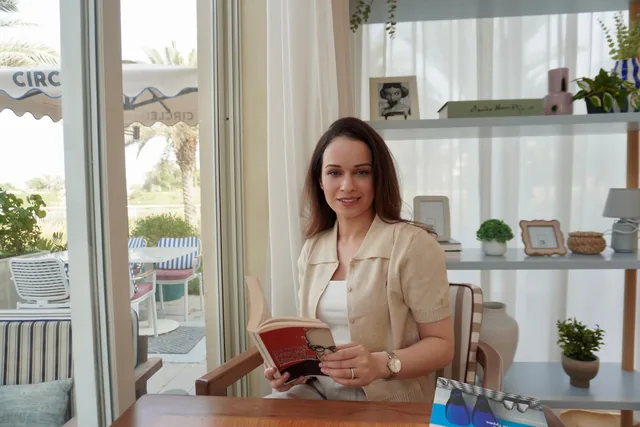
Reviewed by Komel Kaur, psychotherapist and executive coach, M.A. Psychology
Last reviewed 5 August 2026
15
Questions
~3
Minutes
Free
Always
Question 1 of 15 · start here
Overall, I am happy in this relationship.
Pick one and the rest of the Relationship Doubt Check continues on the next screen. Free, no sign-up.
What the Relationship Doubt Check measures
This self-check measures four things at once: how satisfied you currently are, how much active doubt you are carrying, how well the two of you repair after conflict, and whether you still feel respected and not-alone inside the relationship. Each item is answered on a 0-4 scale and the total runs from 0 to 60. A higher total means more doubt and distress on your side.
The satisfaction items are modelled on the Relationship Assessment Scale (Hendrick, 1988), a short and widely used measure of global relationship satisfaction. The doubt and alternatives items come from the investment model (Rusbult, Martz & Agnew, 1998), which found that commitment is predicted not only by satisfaction but by how attractive your alternatives look and how much you have invested.
The conflict items are drawn from Gottman's observational research on what distinguishes couples who stay together from those who separate: criticism of character rather than behaviour, contempt, stonewalling, and - the protective one - whether repair attempts land after a fight.
One item asks about fear. It is scored separately from the total, because fear of a partner is not a satisfaction problem: it is a safety question, and it needs a different answer than a score.
Where the Relationship Doubt Check came from
This screener is not a published instrument. It was assembled for this site from constructs that are: relationship satisfaction (Hendrick's Relationship Assessment Scale, 1988), commitment and quality of alternatives (Rusbult's Investment Model Scale, 1998), and the conflict-process markers identified in Gottman and Levenson's longitudinal studies of married couples, which followed couples for up to fourteen years and reported high accuracy in predicting separation from observed conflict behaviour. The items are worded plainly and reviewed by Komel Kaur, Psychotherapist. Because it is an assembled screener rather than a validated scale, its bands are interpretive guides, not clinical cut-offs.
How the Relationship Doubt Check is scored
Your total falls into one of four bands. These bands describe the level of distress and doubt you reported - they do not predict what will happen, and they do not tell you what to decide.
| Score | Severity | What it usually means |
|---|---|---|
| 0-11 | Steady, with normal friction | Satisfaction, repair and respect are intact. Doubt here usually points at one specific unmet need. |
| 12-22 | Strained | Real strain in repair, respect or closeness. Very changeable at this stage - and the stage most people wait past. |
| 23-36 | At a crossroads | Doubt is persistent and the relationship is not currently able to process it. A structured discernment conversation helps more than more thinking. |
| 37-60 | Seriously unhappy | High distress across every area. Whatever you decide about the relationship, the unhappiness itself warrants support. |
How the Relationship Doubt Check is used in clinical practice
In practice, a screener like this is used at the start of couples or individual work to make an unspoken level of unhappiness visible and specific. It gives a shared language for what has been vague: not 'we're struggling' but 'repair is at zero and respect is holding'.
It is also used for discernment counselling - short, structured work for one partner or both who are not yet sure whether they want to try or to end it. The aim of discernment is clarity and confidence in a decision, not an outcome decided in advance.
Because it is single-sided, its main limitation is what it cannot see. Where both people are willing, a two-sided assessment scores each partner separately and reads the gap between them, which is usually where the actual problem lives.
Limitations to keep in mind
- ·It measures your perception only. Your partner may score the same relationship very differently, and neither reading is the whole picture.
- ·Your current state colours the answers. Depression, burnout, untreated anxiety, grief, a new baby or chronic sleep loss all make a relationship feel less workable than it is. If any of those are live, screen for them too before drawing conclusions.
- ·It is not a validated instrument and not a diagnosis. The bands are interpretive, assembled from published research rather than normed on a sample.
- ·It does not predict outcomes. Relationships with high scores recover; relationships with low scores end. A score is information, not a forecast.
- ·It is not a safety assessment. If there is violence, coercion or fear, please contact local support services rather than relying on a questionnaire.
How to read your Relationship Doubt Check score
A score is a starting point, not a verdict. Here is what each band on the Relationship Doubt Check usually means and what a reasonable next step looks like.
Steady, with normal friction
Your answers describe a relationship that is broadly working. Doubt shows up - it does in almost every long relationship - but satisfaction, repair and respect are intact. What you're feeling is more likely a specific unmet need than a question about the relationship itself.
Next step: If you want to name the thing that's nagging
Strained
There is real strain here. Some of what makes a relationship feel safe - repair after conflict, feeling respected, feeling not-alone - is coming through weaker than the rest. This is the stage where patterns are still very changeable, and where most couples wait too long before doing anything.
Next step: This is the stage where change is cheapest
At a crossroads
Your answers describe someone genuinely weighing whether to stay. Doubt has moved from a passing thought to something you return to, and the conflict and repair items suggest the relationship isn't currently able to metabolise it. That does not mean the answer is to leave - it means the decision deserves better information than rumination alone can give you.
Next step: Deciding well is a skill, and it can be supported
Seriously unhappy
This is a high level of relationship distress. Across satisfaction, respect, repair and loneliness, your answers point the same way. People often live in this for years, telling themselves it isn't that bad. It reads as that bad. Whatever you decide about the relationship, the level of unhappiness itself is worth support.
Next step: You don't have to decide this alone
What happens after a high score
A high Relationship Doubt Check score does not mean something is wrong with you, and it does not confirm a diagnosis. It means the pattern you are living with is measurable, and that a trained person can help you understand it properly.
In practice, the next step is usually a conversation: someone takes your history, rules out other causes (thyroid, sleep debt, medication, grief, life circumstance), and looks at how long this has been going on and how much it is costing you. From there you decide together whether therapy, a medical review, or simply structured support is the right fit.
If you want to bring your result to someone, you can email yourself a copy at the end of the test and book an online session with Komel. Sessions are 60 minutes on Google Meet, and your first one is USD 49.
Instrument and source
This page administers the Relationship Doubt Self-Check (Relationship Doubt Check) as published, without modification to item wording or scoring. It is reproduced here for education and self-screening, scored on your device, and reviewed by Komel Kaur, Psychotherapist.
Modelled on published relationship science: Hendrick SS. A generic measure of relationship satisfaction. J Marriage Fam. 1988;50(1):93-98. Rusbult CE, Martz JM, Agnew CR. The Investment Model Scale. Personal Relationships. 1998;5(4):357-387. Gottman JM, Levenson RW. The timing of divorce. J Marriage Fam. 2000;62(3):737-745. This screener is not itself a validated instrument.
Before you start
- · Find a quiet few minutes - answer honestly, not how you wish you felt.
- · There are no right or wrong answers. Pick what feels closest.
- · This is a screening tool, not a diagnosis.
- · If anything brings up something heavy, support is at the end.
Common questions about the Relationship Doubt Check
Should I break up with my partner?
No questionnaire can answer that, and any that claims to is overselling. What this self-check can do is show you where the distress actually sits - satisfaction, repair after conflict, respect, or loneliness - and how strong it is. People usually find that useful precisely because doubt is vague, and a specific reading is easier to act on.
Is this relationship test accurate?
It is an interpretive screener built from published relationship-science constructs (the Relationship Assessment Scale, the investment model, Gottman's conflict research), not a validated psychometric scale with published norms. It reliably reflects what you reported. It does not predict whether the relationship will last.
Is my relationship healthy?
Healthy relationships are not conflict-free ones. Research consistently finds that what separates stable couples from unstable ones is not how often they argue but what happens during and after: whether criticism stays about behaviour rather than character, whether contempt is absent, and whether repair attempts are accepted. Those are exactly what this check scores.
Can I take this if I'm the only one who wants to?
Yes - it is designed for one person. That's the point. If your partner is also willing, the two-sided assessment scores you both separately and shows the gap between your answers, which is often the most useful finding of all.
How is doubt different from anxiety about the relationship?
Doubt that tracks a real pattern tends to be specific and repeatable: the same unresolved issue, the same shutdown, the same aftermath. Anxiety-driven doubt tends to be global and to move around - fixing on one worry, then another, and rising when you are tired or stressed rather than when something happened. Therapy separates the two.
Is it free and private?
Yes. It is free, no sign-up is needed to take it, and your answers are scored on screen. You only share an email if you want a copy of your result sent to you.
Reviewed by Komel Kaur, psychotherapist and executive coach, M.A. Psychology
Last reviewed 5 August 2026
Modelled on published relationship science: Hendrick SS. A generic measure of relationship satisfaction. J Marriage Fam. 1988;50(1):93-98. Rusbult CE, Martz JM, Agnew CR. The Investment Model Scale. Personal Relationships. 1998;5(4):357-387. Gottman JM, Levenson RW. The timing of divorce. J Marriage Fam. 2000;62(3):737-745. This screener is not itself a validated instrument.