Methodology · reviewed by a practising psychotherapist
How our couples tests are built
Each of the 44 items in our couples tests maps to a construct from published relationship science: attachment anxiety and avoidance from the ECR tradition, satisfaction from the Relationship Assessment Scale, commitment and alternatives from the investment model, and conflict, contempt and repair from Gottman's observational research. Both partners answer separately, and the gap between the two sets of answers is scored as a finding in its own right.
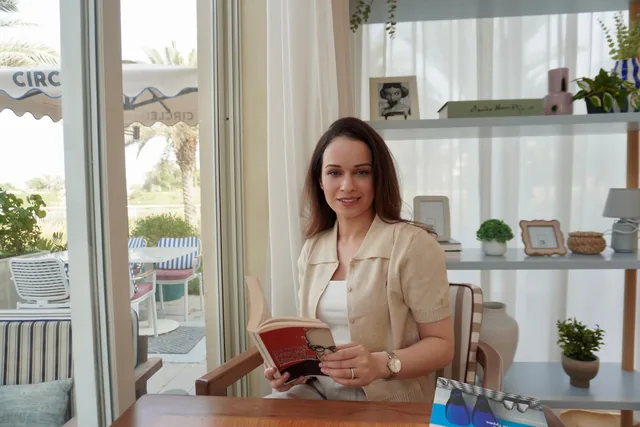
Reviewed by Komel Kaur, psychotherapist and executive coach, M.A. Psychology
Last reviewed 5 August 2026
What each dimension measures
Attachment anxiety
How much you need reassurance that the bond is safe, and how loudly the fear of losing it speaks.
Attachment avoidance
How much closeness feels like pressure, and how quickly you handle things alone instead of leaning in.
Communication and repair
Whether hard things get said, heard, and put back together afterwards.
Trust and security
Reliability, transparency, and the absence of quiet suspicion.
Closeness and affection
Emotional and physical warmth, and how freely it is offered.
Conflict handling
What each of you does when the temperature rises.
Shared direction
Money, family, children, faith, place, roles and career - the practical life you are agreeing to.
Where each construct comes from
Every dimension is traceable to a published instrument or research programme. Here is the full list, so you can read the primary sources yourself.
| Construct | Source |
|---|---|
| Attachment anxiety and avoidance | Experiences in Close Relationships (ECR / ECR-R) traditionBrennan KA, Clark CL, Shaver PR. Self-report measurement of adult attachment. In: Simpson JA, Rholes WS, eds. Attachment Theory and Close Relationships. Guilford Press; 1998:46-76. Fraley RC, Waller NG, Brennan KA. An item response theory analysis of self-report measures of adult attachment. J Pers Soc Psychol. 2000;78(2):350-365. |
| Relationship satisfaction | Relationship Assessment Scale (RAS)Hendrick SS. A generic measure of relationship satisfaction. Journal of Marriage and Family. 1988;50(1):93-98. |
| Commitment, alternatives and investment | Investment Model ScaleRusbult CE, Martz JM, Agnew CR. The Investment Model Scale: measuring commitment level, satisfaction level, quality of alternatives, and investment size. Personal Relationships. 1998;5(4):357-387. |
| Conflict process, contempt and repair | Gottman's observational conflict researchGottman JM, Levenson RW. The timing of divorce: predicting when a couple will divorce over a 14-year period. Journal of Marriage and Family. 2000;62(3):737-745. Gottman JM. What Predicts Divorce? Erlbaum; 1994. |
| Trust and responsiveness | Interpersonal trust and perceived-responsiveness researchRempel JK, Holmes JG, Zanna MP. Trust in close relationships. J Pers Soc Psychol. 1985;49(1):95-112. Reis HT, Clark MS, Holmes JG. Perceived partner responsiveness as an organizing construct. In: Mashek DJ, Aron A, eds. Handbook of Closeness and Intimacy. Erlbaum; 2004. |
| Expectation congruence (money, family, children, faith, roles, career) | Premarital expectation and role-congruence researchLarson JH, Holman TB. Premarital predictors of marital quality and stability. Family Relations. 1994;43(2):228-237. Stanley SM, Amato PR, Johnson CA, Markman HJ. Premarital education, marital quality, and marital stability. Journal of Family Psychology. 2006;20(1):117-126. |
| The four adult attachment styles as quadrants of two dimensions | Adult attachment categoriesHazan C, Shaver P. Romantic love conceptualized as an attachment process. J Pers Soc Psychol. 1987;52(3):511-524. Bartholomew K, Horowitz LM. Attachment styles among young adults: a test of a four-category model. J Pers Soc Psychol. 1991;61(2):226-244. |
| Expression and receipt of affection (the five love languages) | Chapman's five love languages frameworkChapman GD. The Five Love Languages. Northfield Publishing; 1992. Bunt S, Hazelwood ZJ. Walking the walk, talking the talk: love languages, self-regulation, and relationship satisfaction. Personal Relationships. 2017;24(2):280-290. |
Why two sides beats one
Almost every relationship questionnaire online is answered by one person. That produces a reading of one person's perception, filtered through the well-documented asymmetries of self-report: we notice our partner's withdrawal more readily than our own, and we credit ourselves with more repair attempts than an observer would.
Scoring both people separately removes the need to decide whose version is right. Each dimension gets two scores, and the distance between them is reported as a finding: a wide gap on conflict repair means one of you believes things get resolved and the other does not, which is a more actionable fact than either score alone.
Neither of you sees the other's raw answers. The report carries scores, bands, gaps and readings - never a transcript.
How scoring works
- Every item is answered on a five-point agree-to-disagree scale. Negatively worded items are reverse-scored so that, on every dimension, higher always means healthier.
- Each dimension score is the mean of its items, per person, then converted to a band with a written reading. Attachment anxiety and avoidance are reported as a pairing rather than as a single score, because what matters clinically is the combination.
- Gaps are the absolute difference between your two scores on a dimension. The three widest gaps become the report's focus, and each comes with one structured conversation to have.
- Bands are interpretive thresholds, not population percentiles. We do not publish a norm table because we have not normed this questionnaire on a representative sample, and pretending otherwise would be dishonest.
Honest limits
- This is a structured assessment, not a diagnostic instrument. It does not diagnose any condition in either partner.
- It does not predict whether a relationship or a marriage will last. Research can describe risk patterns across large samples; it cannot forecast one couple.
- It is a snapshot. Grief, a new baby, illness, migration or job loss can move scores substantially and temporarily.
- It is not a safety assessment. Where there is violence, coercion or fear, please contact local support services rather than starting with a questionnaire.
Who reviews this
Every item, band description and report template was written and reviewed by Komel Kaur, a practising psychotherapist who works with couples, pre-marital clients and families online. Her training and credentials are on the about page. The content is reviewed when the instrument changes, and the review date appears at the top of this page.
Common questions
Is this test scientifically validated?
Each dimension maps to a construct measured by a published instrument or research programme, and the items are modelled on those instruments. The assembled questionnaire itself has not been through its own independent validation study, so we describe it as evidence-based and reviewed by a practising psychologist rather than a validated clinical instrument.
Why do both partners have to answer?
Single-person relationship questionnaires inherit one person's perception, and self-report on relationships is systematically biased - people over-report their own accommodation and under-report their own withdrawal. Scoring both sides separately means the gap between the two answers becomes visible, and in practice that gap is the most useful finding in the report.
How are the bands set?
Each dimension is scored as the mean of its items on the five-point scale, then expressed as a band. Bands are interpretive thresholds chosen so that the report describes strength honestly rather than flattering it; they are not norm-referenced percentiles against a population sample.
What does a gap between partners mean?
A wide gap means the two of you are experiencing the same dimension differently - for example one of you reads conflict as resolved and the other does not. It is not a measure of who is right. It marks where a conversation is most likely to be productive.
What will the report not tell us?
It will not diagnose anything, will not predict whether the relationship or marriage will last, and is not a safety assessment. It is a structured assessment designed to make patterns discussable.
Who reviewed the questions?
Komel Kaur, a practising psychotherapist, reviewed every item, every band description and every report template. Her credentials are on the about page.
Ready when you are