Love Language Test · How you register and express affection
5 love languages test and quiz: free, all five ranked
Love Language Test
Twenty-five questions across words, time, gifts, acts of service and touch - scored instantly, all five love languages ranked.
This free 5 love languages test, also searched as the 5 languages of love quiz, scores how strongly you register affection through five channels: words of affirmation, quality time, receiving gifts, acts of service and physical touch. It is free, takes about four minutes and needs no sign-up. All 25 questions score every channel out of 20, so you get the five ranked rather than one label, because the gap between your highest and lowest is what explains why care gets missed.
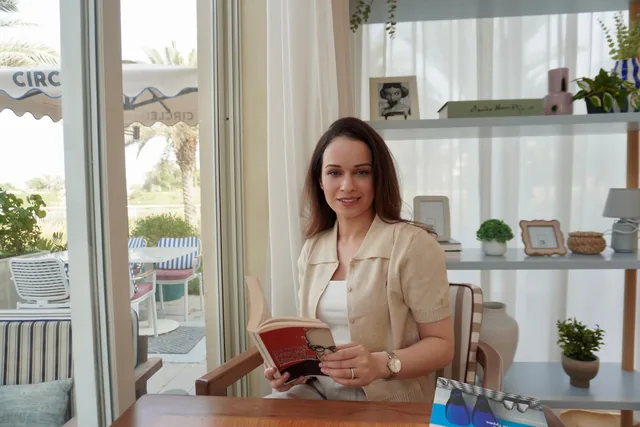
Reviewed by Komel Kaur, psychotherapist and executive coach, M.A. Psychology
Last reviewed 6 August 2026
25
Questions
~4
Minutes
Free
Always
Question 1 of 25 · start here
Being told specifically what someone appreciates about me stays with me for days.
Pick one and the rest of the Love Language Test continues on the next screen. Free, no sign-up.
What the Love Language Test measures
This test measures how strongly you register and express affection through five channels: words of affirmation, quality time, receiving gifts, acts of service and physical touch. Each channel is scored separately out of 20, and you get all five ranked rather than a single label.
The ranking matters more than the winner. Two people can share a top channel and still miss each other constantly if one person's lowest channel is the other's second. The distance between your highest and your lowest score is the practical finding: it tells you which currency lands, and which one a partner can spend generously in without you registering it.
The items ask about two different things on purpose - what you notice when it is missing, and what you instinctively do for people you love. Those often differ. Many people give in one channel and need another, which is one of the more common quiet mismatches in otherwise good relationships.
This is a self-knowledge tool, not a clinical measure. It describes preference, not health, and no result here is better or worse than another.
Where the Love Language Test came from
The five love languages framework was described by Gary Chapman, a marriage counsellor, in his 1992 book The Five Love Languages, drawn from patterns he saw repeatedly in counselling rather than from a research programme. The framework became widely used because its central observation is easy to verify in your own relationship: most couples are not short of care, they are spending it in a currency the other person does not bank. Empirical work since has been mixed. Studies have found that people do differ reliably in expression preferences, and that couples who match, or who adapt to each other's preference, report somewhat higher satisfaction (Bunt & Hazelwood, 2017); other work finds the five-category structure does not hold up as cleanly as a psychometric model. This test uses the five channels as a useful map and reports them as scores rather than as types. It is not the official 5 Love Languages assessment and shares none of its wording.
How the Love Language Test is scored
Each of the five channels is scored 0-20 from five items. Your result names the highest and shows the full ranking, because the low end is as informative as the high end.
| Score | Severity | What it usually means |
|---|---|---|
| 16-20 | Primary channel | Affection given this way lands almost every time. Absence here reads as distance regardless of what else is happening. |
| 11-15 | Strong secondary | Works well for you. A partner whose top channel is here is an easy match. |
| 6-10 | Neutral | Pleasant but not load-bearing. Effort spent here does not fully register as care. |
| 0-5 | Low channel | The blind spot. If this is a partner's top channel, they are likely to feel unloved while you feel you are trying hard. |
How the Love Language Test is used in clinical practice
In couples work the love languages are used as a shared vocabulary rather than as a diagnosis. Their value is that they let a complaint be rephrased as a request: 'you never appreciate me' becomes 'say what you noticed', which a partner can actually act on.
The more useful conversation is usually about the giving profile, not the receiving one. Partners who are working hard in the wrong channel often feel unfairly accused, and seeing both profiles side by side defuses that quickly.
Where a mismatch has been running for years, the presenting problem is rarely the channel itself. It is the accumulated interpretation - that the other person did not care - which is what therapy actually unpicks.
Limitations to keep in mind
- ·It is a framework, not a validated psychometric instrument. The five categories are a useful map of a continuous space, not five distinct types that research has confirmed.
- ·Preferences change. Illness, new parenthood, stress and long-distance periods all shift which channel you need most, so a result from three years ago may not describe you now.
- ·It measures preference, not the relationship. A perfect channel match does not compensate for contempt, dishonesty or incompatible expectations, and a mismatch is not a reason to leave.
- ·Self-report reflects what you can name. Some people score lowest on the channel they were most consistently denied, not the one they need least.
- ·It cannot address safety. Where there is fear, coercion or control, no love-language conversation is the right tool.
How to read your Love Language Test score
A score is a starting point, not a verdict. Here is what each band on the Love Language Test usually means and what a reasonable next step looks like.
Top love language: Words of affirmation
Words of affirmation came out highest. What registers for you is being told, explicitly, what you mean to someone and what they noticed - and the absence of those words is what registers as distance, even when the person is doing plenty. This is the channel most vulnerable to assumption: partners who feel their love is obvious tend to say the least, which is precisely what leaves you unsure.
Next step: When the channels do not match
Top love language: Quality time
Quality time came out highest. What counts for you is undivided attention: time where you are the thing being attended to, not the thing in the background. That is why a partner who is physically present but half-elsewhere can leave you lonelier than one who is away. Quality time is also the channel most eroded by phones, shift work and small children, which is why it often quietly disappears rather than being refused.
Next step: When the channels do not match
Top love language: Receiving gifts
Receiving gifts came out highest. This is the most misread channel: it is rarely about cost and almost always about evidence - proof that you were in someone's mind while you were not in the room. That is also why forgotten occasions land so hard for you, and why a partner who values usefulness over symbols can look unromantic when they are simply spending in a different currency.
Next step: When the channels do not match
Top love language: Acts of service
Acts of service came out highest. Love reads to you as effort: a task handled, a load lifted, something dealt with before you had to ask. It is the channel most likely to show up as resentment when it is missing, because the shortfall is measurable - you can see what did not get done. It is also the channel most tangled with fairness at home, which is worth separating from affection.
Next step: When the channels do not match
Top love language: Physical touch
Physical touch came out highest. Ordinary, non-sexual contact is how closeness registers for you: a hand in passing, sitting against each other, being held for a moment when you are upset. That means a stretch without touch reads as distance regardless of what is being said, and it is the channel most affected by conflict, stress, illness and unresolved resentment, all of which reduce casual contact first.
Next step: When the channels do not match
What happens after a high score
A high Love Language Test score does not mean something is wrong with you, and it does not confirm a diagnosis. It means the pattern you are living with is measurable, and that a trained person can help you understand it properly.
In practice, the next step is usually a conversation: someone takes your history, rules out other causes (thyroid, sleep debt, medication, grief, life circumstance), and looks at how long this has been going on and how much it is costing you. From there you decide together whether therapy, a medical review, or simply structured support is the right fit.
If you want to bring your result to someone, you can email yourself a copy at the end of the test and book an online session with Komel. Sessions are 60 minutes on Google Meet, and your first one is USD 49.
Instrument and source
This page administers the Love Language Test (Love Language Test) as published, without modification to item wording or scoring. It is reproduced here for education and self-screening, scored on your device, and reviewed by Komel Kaur, Psychotherapist.
Chapman GD. The Five Love Languages: How to Express Heartfelt Commitment to Your Mate. Northfield Publishing; 1992. Bunt S, Hazelwood ZJ. Walking the walk, talking the talk: love languages, self-regulation, and relationship satisfaction. Personal Relationships. 2017;24(2):280-290.
Before you start
- · Find a quiet few minutes - answer honestly, not how you wish you felt.
- · There are no right or wrong answers. Pick what feels closest.
- · This is a screening tool, not a diagnosis.
- · If anything brings up something heavy, support is at the end.
Common questions about the Love Language Test
Is the 5 languages of love quiz free?
Yes. This 5 languages of love quiz is free, has 25 questions, takes about four minutes and needs no sign-up or payment to see your result. All five channels are scored out of 20 on screen. You only give an email if you want a copy of the result sent to you, and nothing is hidden behind that.
What are the five love languages?
Words of affirmation, quality time, receiving gifts, acts of service and physical touch. They are five channels through which affection is expressed and registered, described by Gary Chapman in 1992. Most people have a clear top two and a clear lowest.
Is this the official 5 Love Languages test?
No. This is a free 25-question test written for this site, using Chapman's five channels as its framework and citing them. It reuses none of the official assessment's wording and is not affiliated with it.
Can your love language change?
Yes. What you need most shifts with circumstance - after illness, acts of service often rise; through a long-distance stretch, words tend to; after a new baby, quality time becomes scarce and therefore louder. Retaking it every year or two is reasonable.
What if my partner and I have different love languages?
That is the normal case, not a warning sign. Difference only becomes a problem when it goes unnamed, because both people then read effort in the wrong currency as absence of effort. Once each person knows the other's top channel, this is one of the more solvable relationship problems.
Can I take it for my partner?
Guessing their answers is not the same as their result, and the guess is usually shaped by what you would want. The more useful version is for each of you to take it separately and compare, which is exactly what the two-sided couples test does at greater depth.
Is the love language framework scientifically valid?
Partly. The underlying observation - that people differ in how they prefer affection expressed, and that mismatch predicts feeling unloved - has empirical support. The strong version, that everyone has exactly one primary language out of five discrete categories, does not hold up well psychometrically. That is why this test reports five scores rather than assigning you a type.
Reviewed by Komel Kaur, psychotherapist and executive coach, M.A. Psychology
Last reviewed 6 August 2026
Chapman GD. The Five Love Languages: How to Express Heartfelt Commitment to Your Mate. Northfield Publishing; 1992. Bunt S, Hazelwood ZJ. Walking the walk, talking the talk: love languages, self-regulation, and relationship satisfaction. Personal Relationships. 2017;24(2):280-290.