Attachment Style Quiz · Attachment anxiety and avoidance
Attachment style test and quiz: free, both dimensions scored
Attachment Style Quiz
Twenty-four questions scored on attachment anxiety and attachment avoidance, then placed in the attachment style those two add up to.
An attachment style test measures two dimensions: attachment anxiety (fear of being left or not mattering) and attachment avoidance (discomfort with depending on someone). The four styles - secure, anxious-preoccupied, dismissive-avoidant and fearful-avoidant - are the quadrants of those two scales. This free 24-question test scores both and explains what your combination does under conflict.
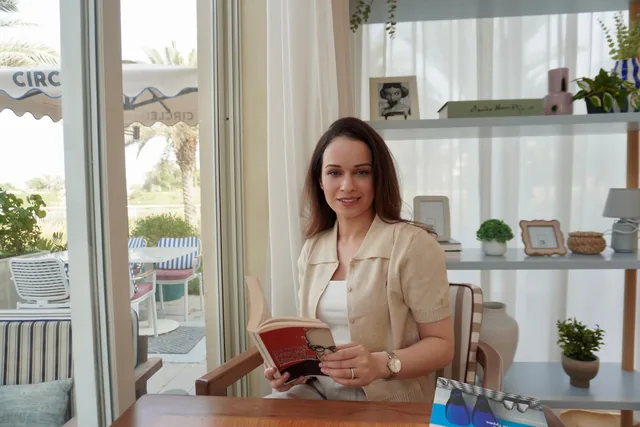
Reviewed by Komel Kaur, psychotherapist and executive coach, M.A. Psychology
Last reviewed 6 August 2026
24
Questions
~4
Minutes
Free
Always
Question 1 of 24 · start here
I worry that a partner will stop wanting me.
Pick one and the rest of the Attachment Style Quiz continues on the next screen. Free, no sign-up.
What the Attachment Style Quiz measures
This quiz measures the two dimensions adult attachment research uses: attachment anxiety and attachment avoidance. Anxiety is the fear of being left, of not mattering enough, of closeness being withdrawn. Avoidance is discomfort with depending on someone - the pull towards handling things alone and keeping part of yourself in reserve.
Each dimension is scored 0-48 from twelve items, and your style is the quadrant the two scores land in. Low on both is secure. High anxiety with low avoidance is anxious-preoccupied. High avoidance with low anxiety is dismissive-avoidant. High on both is fearful-avoidant, sometimes called disorganised.
Reporting the dimensions rather than only the label is deliberate. Someone just over the line on anxiety and someone at the ceiling both get called 'anxious', and they are not in the same situation. The numbers tell you how far into the quadrant you are, and which direction you are closest to leaving it from.
What the quiz is really describing is what you do when closeness is at stake: when you need reassurance, when you are hurt, and when a conversation gets difficult. That is why the result explains behaviour under conflict rather than personality in general.
Where the Attachment Style Quiz came from
Attachment theory began with John Bowlby's work on early caregiving and Mary Ainsworth's observational studies of infants, which identified secure, avoidant and ambivalent patterns of response to separation and reunion. Hazan and Shaver (1987) extended it to adult romantic relationships, and Bartholomew and Horowitz (1991) reorganised adult attachment into four categories built from two underlying dimensions. Brennan, Clark and Shaver (1998) then developed the Experiences in Close Relationships (ECR) scale, which measures those two dimensions directly; Fraley, Waller and Brennan's item-response analysis (2000) produced the revised ECR-R and confirmed that adult attachment is dimensional rather than categorical - the four styles are convenient names for regions of a continuous space. This quiz follows that structure. It is not the ECR or ECR-R and does not reproduce their items; it is a plainly worded quiz written for this site and reviewed by Komel Kaur, Psychotherapist.
How the Attachment Style Quiz is scored
Both dimensions are scored 0-48. The midpoint, 24, is used to place you in a quadrant. Scores near the midpoint should be read as 'either side' rather than as a firm category.
| Score | Severity | What it usually means |
|---|---|---|
| Anxiety under 24, avoidance under 24 | Secure | Closeness and independence are both manageable. Recovery after conflict tends to be quick. |
| Anxiety 24+, avoidance under 24 | Anxious-preoccupied | You go towards closeness but the alarm about losing it stays on. Distance reads as danger. |
| Avoidance 24+, anxiety under 24 | Dismissive-avoidant | Closeness is fine; depending on someone is not. Difficulty is processed alone. |
| Both 24+ | Fearful-avoidant | Wanting closeness and distrusting it at once, so the same relationship pulls you in and pushes you out. |
How the Attachment Style Quiz is used in clinical practice
Attachment measures are used in couples work mainly to explain a cycle rather than to label a person. The most common cycle in therapy rooms is anxious-avoidant: one partner pursues for reassurance, the other withdraws to de-escalate, and each response is exactly what makes the other worse. Naming it stops both people reading it as character.
In individual therapy the dimensions are used to choose a focus. High anxiety points towards work on the alarm and on asking directly rather than testing; high avoidance points towards staying present through overwhelm and putting needs into words at all.
Attachment patterns are not fixed. Longitudinal work finds meaningful movement towards security over time, particularly through a stable relationship or through therapy - which is why the result here is framed as a current pattern rather than a type you are stuck with.
Limitations to keep in mind
- ·It is not the ECR-R or any validated instrument. The items were written for this site on the same two-dimensional structure, so the result is interpretive rather than normed against a published sample.
- ·It is relationship-general, not relationship-specific. Attachment behaviour varies between partners, and a specific relationship with a very unpredictable partner can produce anxious answers from someone who is usually secure.
- ·Your current state colours it. Depression, burnout, a recent betrayal or a fresh break-up all inflate both dimensions temporarily.
- ·Scores close to the midpoint are unstable. If you are at 23 or 25 on a dimension, the label can flip on a retake without anything having changed.
- ·It does not diagnose anything, and no style is a disorder. It also cannot assess safety: fear of a partner is a safety issue, not an attachment finding.
How to read your Attachment Style Quiz score
A score is a starting point, not a verdict. Here is what each band on the Attachment Style Quiz usually means and what a reasonable next step looks like.
Secure attachment
Both your anxiety and your avoidance scores sit below the midpoint. In practice that means closeness does not usually feel dangerous to you and neither does needing someone: you can ask for reassurance without it taking over, and take space without disappearing. Secure attachment is not the absence of insecurity. It shows up as a shorter recovery time - you get rattled, then you come back and repair.
Next step: Where secure attachment still gets tested
Anxious-preoccupied attachment
Your anxiety score is above the midpoint while your avoidance is below it. You want closeness and you are willing to go towards it, but the fear of losing it stays switched on: you scan for signs something is wrong, you need the reconnection before you can settle, and distance registers as danger rather than as a pause. The vigilance is the difficult part, not the wanting. Anxious attachment is highly responsive to a partner who answers plainly and quickly - and it flares hardest opposite someone who withdraws.
Next step: Turning down the alarm without needing less
Dismissive-avoidant attachment
Your avoidance score is above the midpoint while your anxiety is below it. Closeness is manageable for you; depending on someone is what feels risky. You handle difficulty by processing it alone, you keep a part of yourself in reserve, and when a conversation gets emotionally loaded your instinct is distance rather than escalation. From the inside it feels like calm and self-sufficiency. From the outside it often reads as unavailability, which is what partners react to.
Next step: Staying in the room without being flooded
Fearful-avoidant attachment
Both dimensions are above the midpoint, which is the pattern usually called fearful-avoidant or disorganised. You want closeness and you distrust it at the same time, so the same relationship can pull you in and push you out within a week. It often feels contradictory from the inside - reaching hard, then needing to get away from what you reached for. This pattern is more common in people whose early closeness came bundled with unpredictability, and it responds well to therapy that works on the whiplash rather than on either half of it.
Next step: When closeness and threat arrive together
What happens after a high score
A high Attachment Style Quiz score does not mean something is wrong with you, and it does not confirm a diagnosis. It means the pattern you are living with is measurable, and that a trained person can help you understand it properly.
In practice, the next step is usually a conversation: someone takes your history, rules out other causes (thyroid, sleep debt, medication, grief, life circumstance), and looks at how long this has been going on and how much it is costing you. From there you decide together whether therapy, a medical review, or simply structured support is the right fit.
If you want to bring your result to someone, you can email yourself a copy at the end of the test and book an online session with Komel. Sessions are 60 minutes on Google Meet, and your first one is USD 49.
Instrument and source
This page administers the Attachment Style Quiz (Attachment Style Quiz) as published, without modification to item wording or scoring. It is reproduced here for education and self-screening, scored on your device, and reviewed by Komel Kaur, Psychotherapist.
Brennan KA, Clark CL, Shaver PR. Self-report measurement of adult attachment. In: Simpson JA, Rholes WS, eds. Attachment Theory and Close Relationships. Guilford Press; 1998:46-76. Bartholomew K, Horowitz LM. Attachment styles among young adults. J Pers Soc Psychol. 1991;61(2):226-244.
Before you start
- · Find a quiet few minutes - answer honestly, not how you wish you felt.
- · There are no right or wrong answers. Pick what feels closest.
- · This is a screening tool, not a diagnosis.
- · If anything brings up something heavy, support is at the end.
Common questions about the Attachment Style Quiz
What are the four attachment styles?
Secure, anxious-preoccupied, dismissive-avoidant and fearful-avoidant (also called disorganised). They are the four quadrants formed by two dimensions: how much you fear losing closeness, and how much you avoid depending on someone.
What is my attachment style?
It is determined by where you fall on those two dimensions rather than by one answer. This free 24-question quiz scores both out of 48 and names the quadrant they land in, along with what that combination tends to do under conflict.
Can your attachment style change?
Yes. Research finds movement towards security over time, particularly through a long relationship with a consistently responsive partner, or through therapy. Change is usually gradual and shows up first as a shorter recovery time after conflict rather than as a different label.
Which attachment styles are worst together?
Anxious and avoidant is the hardest common pairing, because each person's coping response triggers the other's fear: pursuit reads as pressure, withdrawal reads as abandonment. It is very workable once both people can see the cycle rather than only the other person's half of it.
Is fearful-avoidant attachment the same as disorganised?
In adult attachment research the terms are used near-interchangeably. Both describe high anxiety alongside high avoidance - wanting closeness while treating it as unsafe. It is more common in people whose early closeness came bundled with unpredictability.
Is this the ECR test?
No. The ECR and ECR-R are published research instruments. This quiz uses the same two-dimensional structure and cites that research, but the items are written for this site and the result is interpretive rather than normed.
Can I find out my partner's attachment style?
Only by them answering. Guessing tends to produce whichever style explains your own frustration. The two-sided couples test is built for this: both of you answer separately and the report reads the pairing rather than either person alone.
Reviewed by Komel Kaur, psychotherapist and executive coach, M.A. Psychology
Last reviewed 6 August 2026
Brennan KA, Clark CL, Shaver PR. Self-report measurement of adult attachment. In: Simpson JA, Rholes WS, eds. Attachment Theory and Close Relationships. Guilford Press; 1998:46-76. Bartholomew K, Horowitz LM. Attachment styles among young adults. J Pers Soc Psychol. 1991;61(2):226-244.