For two people · free · answer separately, compare after
Love language test for couples
To take the love language test as a couple, each of you answers separately and then compares the full five-channel ranking rather than only the top result. The useful comparison is your lowest channel against your partner's highest: that pairing is where generous effort goes unnoticed, and it is the specific mismatch most couples have never named.
Answer separately. Then compare your lowest channel against their highest - that crossing is where the missed effort lives.

Komel Kaur
Psychotherapist + Executive Coach
M.A. Psychology
CBT and DBT trained psychotherapist
5 languages
English, Hindi, Punjabi, Urdu, Kashmiri
60-minute sessions
Online video, times shown on your own clock
No payment to request
Ask for a time first, pay once it is confirmed
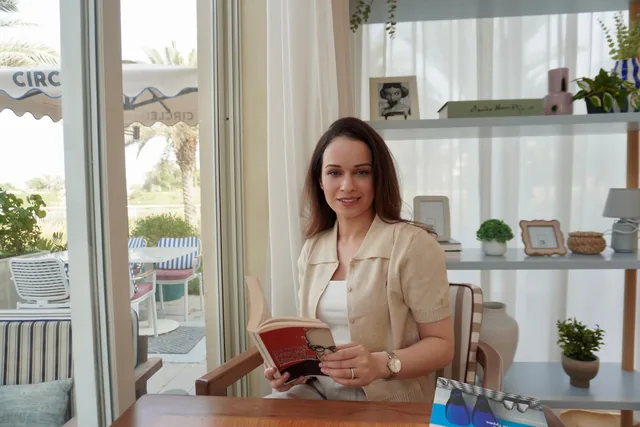
Reviewed by Komel Kaur, psychotherapist and executive coach, M.A. Psychology
Last reviewed 6 August 2026
Take these separately, then compare
Free · 25 questions · all five ranked
Love language test
Scores words, quality time, gifts, acts of service and touch out of 20 each, so you see your lowest channel as well as your highest.
Take it free →Free · 24 questions · both dimensions scored
Attachment style quiz
Scores attachment anxiety and avoidance out of 48 each, then names the style they add up to and what it does under conflict.
Take it free →Free · 15 questions · you alone
Relationship doubt self-check
Scores satisfaction, doubt, repair after conflict, respect and loneliness. Instant result, no sign-up.
Take it free →Free · 15 questions · you alone
Relationship doubt self-check
Scores satisfaction, doubt, repair after conflict, respect and loneliness. Instant result, no sign-up.
Take the free check →USD 49 · both people answer
The two-sided couples tests
You each answer 44 questions privately, then get one joint report - attachment pairing, five dimensions side by side, and your three widest gaps.
Compare both tests →Love languages cover how affection lands. The two-sided test covers attachment pairing, conflict and repair, trust, shared direction and closeness - and reads the gap between your two sets of answers.
Read the methodology: which research each question comes from →
Compare the full ranking, not the winner
Two people can share a top love language and still miss each other constantly. The reason is that the misses happen at the bottom of the list, not the top. If your lowest channel is your partner's second, you will be underspending in exactly the place they notice - while both of your top channels are being well served.
That is why this test scores all five out of twenty rather than crowning one. Put the two rankings next to each other and look for the biggest crossings: their high against your low, and your high against their low. Those two lines are usually the entire argument.
A twenty-minute conversation that works
- Each of you reads out your top two and, more importantly, your lowest.
- Name one recent moment where you were trying hard and it did not seem to land. Locate it on the channels.
- Each of you asks for one specific, repeatable thing in your top channel. Specific means it could happen this week.
- Each of you names one thing you have been doing generously that you now suspect is in the wrong currency, and ask whether that is true.
- Agree to revisit it in a month, because the first attempt at a new channel usually feels stiff and gets abandoned without a check-in.
What this will not resolve
Channel mismatch explains care that is given and not received. It does not explain contempt, dishonesty, an absence of repair after conflict, or expectations that genuinely conflict about money, family, children or where you live.
If your honest read is that the problem is not translation but respect - or that you are managing a reaction rather than having a conversation - the free doubt self-check measures that, and the two-sided assessment measures it for both of you.
Common questions
How do we take the love language test as a couple?
Take it separately, without discussing the items first, then compare results. Answering together tends to produce agreement rather than accuracy, because each of you adjusts towards what the other seems to want. Two independent results, compared afterwards, is what makes the mismatch visible.
What do we do once we know each other's love languages?
Convert it into two specific requests each, not a general resolution. 'Say what you noticed on a normal day', 'twenty minutes with no phones after dinner', 'handle the thing I keep putting off' are all actionable. 'Be more affectionate' is not, and it quietly turns into a complaint.
What if we have completely different love languages?
That is the normal case. Difference is only a problem while it is unnamed, because until then each of you reads the other's effort in the wrong currency as a lack of effort. Once both channels are explicit, this is one of the more solvable relationship problems - it needs redirection, not more love.
Is one payment or sign-up needed?
No. The love language test is free for each of you, with no sign-up needed to see your result. The paid product on this site is a different, deeper thing: a two-sided 44-question assessment that produces one joint report.
How is this different from the paid couples test?
Love languages describe how affection is expressed and received. The USD 49 two-sided test measures attachment pairing, conflict and repair, trust, shared direction and closeness, and reads the gap between your two sets of answers. They answer different questions; the love language test is the lighter one.
Can we do this if we are long-distance?
Yes, and it is particularly worth doing. Distance mechanically removes touch and most acts of service, so if either of those is a top channel it explains a lot of unexplained flatness. Knowing that lets you overweight the channels distance still allows.
How it works
Three steps, about five minutes.
No waiting list, no phone tag, no chasing a reply. You can have a time requested before you close this page, and nothing is paid until it is confirmed.
01
Pick a session and a time
Choose the session you want and a slot that suits you. Times are shown on your own clock, and evening slots are open.
02
Request it, no payment yet
Leave a few details and send the request. The slot is held for you while Komel confirms she is the right fit.
03
Confirm and get your Meet link
Komel sends a payment link for that session. Once it is paid, the Google Meet link lands in your inbox.
Sessions and pricing
Pick the session that fits, then a time.
Full session
60 minutes
USD 70USD 49
Your first session. USD 70 for sessions after that.
New client offerOne-off, no commitment
A complete therapy hour, one to one.
Book this →
Most chosen5-session plan
60 minutes
USD 49per session
Same price every time.
Save 30% per sessionNothing upfront, pay one session at a time
Five hours of real work at the lower rate the whole way through.
Book this →
Couples session
60 minutes, for two
USD 120USD 99
Your first session. USD 120 for sessions after that.
New client offerOne-off, no commitment
One hour with both partners on the same video call.
Book this →
From the practice
What Komel writes about, week to week.
When this is not the right fit
Komel is a psychotherapist and executive coach based in the UAE, working online worldwide. Sessions are private and self-funded, and cannot be claimed on local insurance or used for legal, medical or workplace reports. She does not prescribe or manage medication.
This is not an emergency service. If you are in immediate danger, use a local crisis line rather than a booking request. Her credentials and training and the full scope of practice are published.