Love language · quality time
Quality time as a love language
Quality time is the love language of undivided attention. If it is your top channel, what registers as love is being the thing your partner is attending to rather than the thing in the background, which is why an hour of genuine focus can outweigh a week of shared proximity.
Proximity is not the unit. Attention is. Most couples in this pattern are spending plenty of the first and almost none of the second.

Komel Kaur
Psychologist + Executive Coach
M.A. Psychology
CBT and DBT trained psychologist
5 languages
English, Hindi, Punjabi, Urdu, Kashmiri
60-minute sessions
Online video, times shown on your own clock
No payment to request
Ask for a time first, pay once it is confirmed
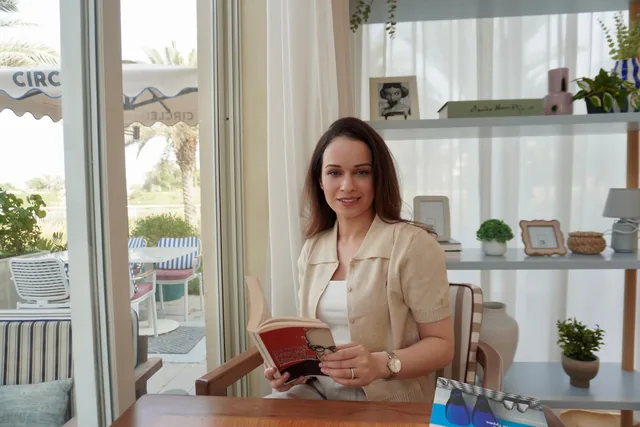
Reviewed by Komel Kaur, psychologist and executive coach, M.A. Psychology
Last reviewed 20 August 2026
Find your own ranking first
Free · 25 questions · all five ranked
Love language test
Scores words, quality time, gifts, acts of service and touch out of 20 each, so you see your lowest channel as well as your highest.
Take it free →Free · 24 questions · both dimensions scored
Attachment style quiz
Scores attachment anxiety and avoidance out of 48 each, then names the style they add up to and what it does under conflict.
Take it free →Free · 15 questions · you alone
Relationship doubt self-check
Scores satisfaction, doubt, repair after conflict, respect and loneliness. Instant result, no sign-up.
Take it free →The other four love languages
Start from the overview of all five love languages →
Taking it as a couple: how to compare two rankings →
When the pattern is deeper than channels: attachment styles →
Free · 15 questions · you alone
Relationship doubt self-check
Scores satisfaction, doubt, repair after conflict, respect and loneliness. Instant result, no sign-up.
Take the free check →USD 49 · both people answer
The two-sided couples tests
You each answer 44 questions privately, then get one joint report - attachment pairing, five dimensions side by side, and your three widest gaps.
Compare both tests →Love languages explain care that is given and not received. Where the issue is repair, respect or expectations that genuinely differ, the two-sided test measures those for both of you.
Read the methodology: which research each question comes from →
What it looks like when it is being met
- Conversations that are not about logistics, and that nobody is trying to finish.
- Phones out of reach rather than face down, for a defined stretch.
- Being asked follow-up questions, which is the clearest evidence that attention is real.
- Small rituals that repeat: a walk, a coffee before the house wakes, twenty minutes after dinner.
What it looks like when it is starved
This is the channel that erodes without an argument. Nothing happens. Shifts change, a child arrives, one person's work gets heavier, and the couple slides into being co-managers of a household who have not had a real conversation in six weeks.
The specific injury is divided attention rather than absence. Being talked to while your partner scrolls is often worse than them being out, because it says the attention exists and is being spent elsewhere.
People with this channel starved tend to escalate to get focus - a bigger emotional statement, a fight, a threat to leave - because that reliably produces the undivided attention that ordinary requests do not.
What to actually ask for
- Twenty minutes, same time, most days. Regularity beats a monthly date night, which is easy to cancel and carries too much weight when it happens.
- Name the condition, not just the slot: no phones, no television, not while cooking.
- Bring a question rather than an agenda. This channel is fed by curiosity, not by scheduled relationship maintenance.
- Protect one shared activity that is not admin and not screens. Walking works because it removes eye contact, which makes difficult conversation easier.
How it collides with the other four
- With acts of service: they are doing chores in the next room to show love. You wanted them sitting down. Both of you are giving and neither is receiving.
- With words of affirmation: they say the loving thing on the way past. You wanted the twenty minutes in which it could have been said properly.
- With receiving gifts: the anniversary present arrives and lands flat, because what you were hoping for was an unhurried evening with no phone.
- With physical touch: usually the easiest pairing, since touch tends to accompany presence. It fails only when touch replaces conversation entirely.
When distance, shift work or small children change it
Long distance is hardest on this channel and on touch. A scheduled call is not automatically quality time; it becomes quality time when it has the same conditions as an in-person version, which usually means shorter, undistracted, and not a status update on both days.
Shift work and young children remove the natural slots rather than the willingness. The fix is unromantic and effective: pick the slot that survives the schedule, defend it, and lower the expectation of what happens in it. Twenty reliable minutes will outperform an aspirational evening that keeps getting postponed.
Common questions
What does the quality time love language mean?
It means undivided attention is how you register affection. Time spent in the same room while your partner is on their phone does not count towards it, and often subtracts from it, because the felt message is that attention is available and going somewhere else.
What counts as quality time in a relationship?
Any stretch where you are each other's focus: a conversation with follow-up questions, a walk, a shared meal without screens, working on something together with talking allowed. What does not count is parallel screen time, or a conversation conducted while one of you is doing something else.
How much quality time does a couple need?
Frequency matters more than duration. Twenty undistracted minutes most days does more for this channel than a three-hour date once a month, because the need being met is ongoing contact rather than an event. Couples who rely on the monthly version tend to find it gets cancelled first when life gets busy.
My partner is always on their phone. How do I raise it?
Ask for a specific window rather than a change of character, and say what it is for. 'Can we do twenty minutes after dinner with phones in the other room' is a request. 'You are always on your phone' is a verdict, and it usually produces defensiveness rather than the twenty minutes.
Is quality time the same as needing to do everything together?
No. This channel is about the quality of attention within the time, not the quantity of shared hours. A person high on quality time and comfortable with independence can be perfectly happy with separate evenings, as long as some part of the day belongs to the two of you and is genuinely undivided.
How it works
Three steps, about five minutes.
No waiting list, no phone tag, no chasing a reply. You can have a time requested before you close this page, and nothing is paid until it is confirmed.
01
Pick a session and a time
Choose the session you want and a slot that suits you. Times are shown on your own clock, and evening slots are open.
02
Request it, no payment yet
Leave a few details and send the request. The slot is held for you while Komel confirms she is the right fit.
03
Confirm and get your Meet link
Komel sends a payment link for that session. Once it is paid, the Google Meet link lands in your inbox.
Sessions and pricing
Pick the session that fits, then a time.
Full session
60 minutes
USD 70USD 49
Your first session. USD 70 for sessions after that.
New client offerOne-off, no commitment
A complete therapy hour, one to one.
Book this →
Most chosen5-session plan
60 minutes
USD 49per session
Same price every time.
Save 30% per sessionPaid upfront, covers all five sessions
Five hours of real work at the lower rate the whole way through.
Book this →
Couples session
60 minutes, for two
USD 120USD 99
Your first session. USD 120 for sessions after that.
New client offerOne-off, no commitment
One hour with both partners on the same video call.
Book this →
From the practice
What Komel writes about, week to week.
When this is not the right fit
Komel is a psychologist and executive coach based in the UAE, working online worldwide. Sessions are private and self-funded, and cannot be claimed on local insurance or used for legal, medical or workplace reports. She does not prescribe or manage medication.
This is not an emergency service. If you are in immediate danger, use a local crisis line rather than a booking request. Her credentials and training and the full scope of practice are published.