Love language · physical touch
Physical touch as a love language
Physical touch is the love language of ordinary contact. For most people who score highest here it is not primarily about sex: it is the hand on the back passing through the kitchen, sitting against each other, being reached for. Closeness gets registered through the body, and its absence is felt as distance long before either person can name a problem.
It is also the first channel to disappear under conflict, stress and illness, which is precisely when it is being read most closely.

Komel Kaur
Psychologist + Executive Coach
M.A. Psychology
CBT and DBT trained psychologist
5 languages
English, Hindi, Punjabi, Urdu, Kashmiri
60-minute sessions
Online video, times shown on your own clock
No payment to request
Ask for a time first, pay once it is confirmed
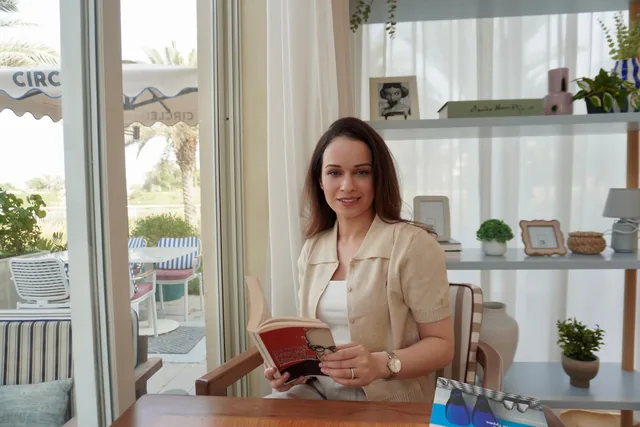
Reviewed by Komel Kaur, psychologist and executive coach, M.A. Psychology
Last reviewed 20 August 2026
Find your own ranking first
Free · 25 questions · all five ranked
Love language test
Scores words, quality time, gifts, acts of service and touch out of 20 each, so you see your lowest channel as well as your highest.
Take it free →Free · 24 questions · both dimensions scored
Attachment style quiz
Scores attachment anxiety and avoidance out of 48 each, then names the style they add up to and what it does under conflict.
Take it free →Free · 15 questions · you alone
Relationship doubt self-check
Scores satisfaction, doubt, repair after conflict, respect and loneliness. Instant result, no sign-up.
Take it free →The other four love languages
Start from the overview of all five love languages →
Taking it as a couple: how to compare two rankings →
When the pattern is deeper than channels: attachment styles →
Free · 15 questions · you alone
Relationship doubt self-check
Scores satisfaction, doubt, repair after conflict, respect and loneliness. Instant result, no sign-up.
Take the free check →USD 49 · both people answer
The two-sided couples tests
You each answer 44 questions privately, then get one joint report - attachment pairing, five dimensions side by side, and your three widest gaps.
Compare both tests →Love languages explain care that is given and not received. Where the issue is repair, respect or expectations that genuinely differ, the two-sided test measures those for both of you.
Read the methodology: which research each question comes from →
What it looks like when it is being met
- Contact happens in passing and without a purpose attached to it.
- Reconnection after an argument includes some physical element, which for this channel is what makes an apology feel true.
- Touch is not only initiated by one person, since being reached for carries a different message than being available.
- Non-sexual and sexual touch both exist, and neither has to be a negotiation for the other.
What it looks like when it is starved
The most common pattern is a couple who are affectionate in a scheduled way and almost never in an ordinary way. Sex may be present and the channel still starved, because what this channel needs is frequency and casualness rather than intensity.
Under conflict it collapses first. A stretch of tension produces days without contact, and for a touch-led partner those days are far more informative than anything being said, which is why they often escalate to get physical reconnection back.
It also collapses under stress, illness, chronic pain, depression and the first year after a baby. When one partner withdraws physically for one of those reasons and the other reads it as rejection, both people end up managing the wrong problem.
What to actually ask for
- Name the non-sexual version explicitly, so it does not become a conversation about sexual frequency by accident.
- Ask for anchors: a proper greeting when one of you comes in, contact on the sofa, a hand on the way past.
- Agree what happens after an argument. For this channel, sitting closer is often the repair that makes the words believable.
- If touch is currently difficult for medical, trauma or postnatal reasons, say so directly and agree a substitute channel for that period rather than leaving it unexplained.
How it collides with the other four
- With words of affirmation: they reassure verbally across the room. You needed them to come over, and the sentence does not close the gap.
- With acts of service: they express care by getting things done, and are frequently mid-task when you reach for them, which turns affection into interruption.
- With quality time: usually compatible, since presence enables contact. It fails when time together is entirely screen-based and parallel.
- With receiving gifts: an object cannot substitute for contact here, and a gift offered instead of physical reconnection after conflict tends to read as avoidance.
Distance, and when touch is not simple
Long distance removes this channel mechanically. If touch is your top language, distance will feel disproportionately hard and that is not a sign the relationship is wrong. It means the two of you should deliberately overweight the channels distance still allows, and treat reunions as the repair rather than the reward.
Touch is also not neutral for everyone. Trauma histories, sensory sensitivity, chronic pain and some medical conditions make ordinary contact effortful or aversive at times. Where that is present, this is a conversation to have plainly and in advance rather than in the moment, and it is one couples therapy handles routinely.
Common questions
Is the physical touch love language about sex?
Mostly not. For the majority of people who score highest here, the channel is fed by ordinary non-sexual contact: being reached for in passing, sitting against each other, a hand on the shoulder. Sex can be part of it, but a couple can have a regular sex life and still have this channel starved because the casual contact between has disappeared.
What are examples of physical touch as a love language?
A proper greeting rather than a shout from the hallway, contact while watching something, being reached for while cooking, sitting closer after a disagreement, hands held in public, and being held without it being the start of anything else.
Why does my partner withdraw physically when we argue?
Often because their nervous system is doing the opposite of yours. Avoidant coping under conflict pulls towards space, while a touch-led partner reads distance as the loss itself, so pursuit increases and withdrawal increases with it. Naming the cycle before the next argument, rather than during, is what breaks it. The attachment style quiz maps this directly.
What if physical touch is difficult for one of us?
Then it needs stating outside the moment. Trauma, sensory sensitivity, chronic pain, postnatal recovery and depression all make contact effortful, and none of them mean the relationship is failing. Agree what is welcome and what is not, agree a substitute channel for the period, and revisit it, so the touch-led partner is not left interpreting silence.
How do we manage this in a long-distance relationship?
Accept that this channel cannot be fed remotely and stop measuring the relationship by it while apart. Overweight words and quality time deliberately, keep contact frequent rather than long, and treat visits as the point at which this channel gets replenished rather than as a test of how the relationship is doing.
How it works
Three steps, about five minutes.
No waiting list, no phone tag, no chasing a reply. You can have a time requested before you close this page, and nothing is paid until it is confirmed.
01
Pick a session and a time
Choose the session you want and a slot that suits you. Times are shown on your own clock, and evening slots are open.
02
Request it, no payment yet
Leave a few details and send the request. The slot is held for you while Komel confirms she is the right fit.
03
Confirm and get your Meet link
Komel sends a payment link for that session. Once it is paid, the Google Meet link lands in your inbox.
Sessions and pricing
Pick the session that fits, then a time.
Full session
60 minutes
USD 70USD 49
Your first session. USD 70 for sessions after that.
New client offerOne-off, no commitment
A complete therapy hour, one to one.
Book this →
Most chosen5-session plan
60 minutes
USD 49per session
Same price every time.
Save 30% per sessionPaid upfront, covers all five sessions
Five hours of real work at the lower rate the whole way through.
Book this →
Couples session
60 minutes, for two
USD 120USD 99
Your first session. USD 120 for sessions after that.
New client offerOne-off, no commitment
One hour with both partners on the same video call.
Book this →
From the practice
What Komel writes about, week to week.
When this is not the right fit
Komel is a psychologist and executive coach based in the UAE, working online worldwide. Sessions are private and self-funded, and cannot be claimed on local insurance or used for legal, medical or workplace reports. She does not prescribe or manage medication.
This is not an emergency service. If you are in immediate danger, use a local crisis line rather than a booking request. Her credentials and training and the full scope of practice are published.