Attachment · two dimensions, four patterns
Attachment styles in relationships: the four patterns explained
Adult attachment is measured on two dimensions: attachment anxiety (fear of losing closeness) and attachment avoidance (discomfort with depending on someone). The four named styles - secure, anxious-preoccupied, dismissive-avoidant and fearful-avoidant - are the quadrants those two scales create. What the pattern predicts is not how much you love someone, but what you do in the first ten minutes of a difficult conversation.
Attachment does not predict how much you love someone. It predicts what you do in the first ten minutes of a difficult conversation.

Komel Kaur
Psychotherapist + Executive Coach
M.A. Psychology
CBT and DBT trained psychotherapist
5 languages
English, Hindi, Punjabi, Urdu, Kashmiri
60-minute sessions
Online video, times shown on your own clock
No payment to request
Ask for a time first, pay once it is confirmed
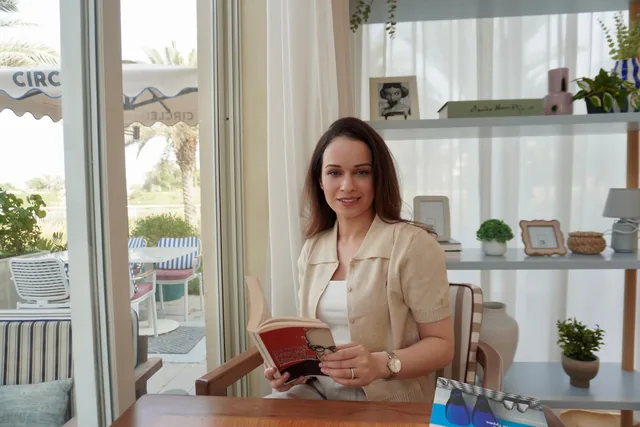
Reviewed by Komel Kaur, psychotherapist and executive coach, M.A. Psychology
Last reviewed 6 August 2026
Score your own two dimensions
Free · 25 questions · all five ranked
Love language test
Scores words, quality time, gifts, acts of service and touch out of 20 each, so you see your lowest channel as well as your highest.
Take it free →Free · 24 questions · both dimensions scored
Attachment style quiz
Scores attachment anxiety and avoidance out of 48 each, then names the style they add up to and what it does under conflict.
Take it free →Free · 15 questions · you alone
Relationship doubt self-check
Scores satisfaction, doubt, repair after conflict, respect and loneliness. Instant result, no sign-up.
Take it free →One page per attachment style
Secure attachment
Low anxiety, low avoidance. Closeness is available and depending on someone is not a risk.
Read the page →Anxious attachment
High anxiety, low avoidance. Closeness is wanted and distance reads as danger.
Read the page →Avoidant attachment
High avoidance. Closeness is wanted but depending on someone feels like exposure.
Read the page →Fearful-avoidant attachment
High on both dimensions. Closeness is wanted and treated as unsafe at the same time.
Read the page →Free · 15 questions · you alone
Relationship doubt self-check
Scores satisfaction, doubt, repair after conflict, respect and loneliness. Instant result, no sign-up.
Take the free check →USD 49 · both people answer
The two-sided couples tests
You each answer 44 questions privately, then get one joint report - attachment pairing, five dimensions side by side, and your three widest gaps.
Compare both tests →Attachment matters most as a pairing. The two-sided test scores both of you and reads the combination, including the anxious-avoidant cycle if that is what you are in.
Read the methodology: which research each question comes from →
Two dimensions, not four boxes
Read the two scores first, then the label.
The labels are shorthand. What research measures is two continuous scales. Attachment anxiety is the alarm about being left, not mattering enough, or closeness being withdrawn. Attachment avoidance is discomfort with depending on someone - the pull towards handling things alone and keeping something in reserve.
Bartholomew and Horowitz set out the four-category model in 1991 as the quadrants of those two dimensions, and Brennan, Clark and Shaver's ECR scale measures them directly. Fraley and colleagues later confirmed the structure is dimensional: the four styles are convenient names for regions, not distinct kinds of people.
This matters in practice. Someone barely over the line and someone at the ceiling both get called 'anxious' and are not in the same situation. Read the numbers, then the label.
What each pattern does under conflict
Four patterns, one behaviour each, at the moment it matters most.
- Secure
- Raises the problem reasonably early, can hear a complaint without it becoming about worth, recovers within hours rather than days.
- Anxious
- Needs resolution now, reads delay as danger, tends to test rather than ask directly - and the testing is the part that reliably backfires.
- Dismissive-avoidant
- Goes quiet and flattens the emotion, processes it alone, returns as if nothing happened. The withdrawal is regulation, not indifference, but it is almost never received that way.
- Fearful-avoidant
- Does both in sequence: pursues hard, then shuts down once the closeness arrives. Feels contradictory from inside as well as outside.
What do you want to do?
Free · on my own
Take the free attachment quiz
24 questions, about 4 minutes, anxiety and avoidance scored separately.
Free to start · with a partner
Do the two-sided test
You each answer privately, then one joint report reads the pairing.
With a therapist
Talk it through
A 60 minute session online, with Komel.
The anxious-avoidant cycle, in order
Neither person is being unreasonable. Each is doing the one thing that makes the other worse.
One partner senses distance and moves towards it, asking for reassurance. The other feels the intensity as pressure and steps back to de-escalate. The step back confirms the first partner's fear, so they escalate. The escalation confirms the second partner's need for space, so they withdraw further.
Neither person is doing anything unreasonable. Each is doing the one thing that most reliably makes the other worse. This is why naming the cycle changes so much: until it has a name, both people are collecting evidence about the other's character rather than about a loop.
The exits are asymmetric. The anxious partner's work is to ask directly instead of testing, and to tolerate a delay in reassurance. The avoidant partner's work is to say 'I need twenty minutes, and I will come back' out loud - because a stated pause is a completely different signal from a silent one.
The four common pairings
The combination predicts more than either person's own label.
- Secure + anything
- The most forgiving combination, and still not neutral: a secure partner tends to end up doing all the reassuring with an anxious partner, or all the reaching with an avoidant one.
- Anxious + avoidant
- The pursue-withdraw loop, and the most common distress pattern in couples work. Very workable once both people can see the cycle rather than only the other person's half of it.
- Anxious + anxious
- Fast, intense and rarely distant, but conflict escalates quickly because neither person can leave it unresolved. The work is on de-escalation rather than on reassurance.
- Avoidant + avoidant
- Calm and low-friction on the surface, and prone to quietly drifting apart, because nothing requires either person to raise anything.
Where attachment stops being the explanation
Fear of a partner is a safety matter, not an attachment finding.
Attachment explains a pattern of approach and retreat. It does not explain dishonesty, contempt, or a partner whose behaviour you are frightened of. Framing those as attachment is one of the more common ways people talk themselves into staying somewhere unsafe.
Fear of a partner is a safety matter, not an attachment finding. It needs specialist support rather than a questionnaire, and the crisis resources on this site list where to start.
Common questions
What are the four attachment styles?
Secure (low anxiety, low avoidance), anxious-preoccupied (high anxiety, low avoidance), dismissive-avoidant (low anxiety, high avoidance) and fearful-avoidant, also called disorganised (high on both). They are regions of a two-dimensional space rather than four separate personality types.
Which attachment styles are worst together?
Anxious with avoidant is the hardest common pairing, because each person's way of coping is precisely what escalates the other's fear. Pursuit for reassurance reads as pressure; withdrawal to calm down reads as abandonment. It is very workable, but only once both people can see the cycle instead of only the other person's half of it.
Can attachment style change?
Yes. Longitudinal research finds meaningful movement towards security, most often through a long relationship with a consistently responsive partner, or through therapy. Change usually shows up first as faster recovery after conflict rather than as a different label.
Is anxious attachment a disorder?
No. None of the four styles is a diagnosis. They describe strategies that made sense in the environment that produced them - staying alert to a caregiver's mood, or learning to need less. They become a problem only when they are applied to a partner who is not that environment.
Is fearful-avoidant the same as disorganised attachment?
In adult attachment research the terms are used near-interchangeably: high anxiety alongside high avoidance - wanting closeness and treating it as unsafe at once. It is more common where early closeness came bundled with unpredictability, so the same person was both the comfort and the threat.
How do I know my partner's attachment style?
Only by them answering. Guessing tends to produce whichever style best explains your own frustration. The two-sided couples test is built for this: you each answer separately and the report reads the pairing rather than either person in isolation.
Can you be secure with one person and anxious with another?
Yes. Attachment behaviour is partly relationship-specific. A partner who is genuinely unpredictable will produce anxious behaviour in someone who is usually secure, which is why a result should be read as a description of a current pattern, not a permanent trait.
How it works
Three steps, about five minutes.
No waiting list, no phone tag, no chasing a reply. You can have a time requested before you close this page, and nothing is paid until it is confirmed.
01
Pick a session and a time
Choose the session you want and a slot that suits you. Times are shown on your own clock, and evening slots are open.
02
Request it, no payment yet
Leave a few details and send the request. The slot is held for you while Komel confirms she is the right fit.
03
Confirm and get your Meet link
Komel sends a payment link for that session. Once it is paid, the Google Meet link lands in your inbox.
Sessions and pricing
Pick the session that fits, then a time.
Full session
60 minutes
USD 70USD 49
Your first session. USD 70 for sessions after that.
New client offerOne-off, no commitment
A complete therapy hour, one to one.
Book this →
Most chosen5-session plan
60 minutes
USD 49per session
Same price every time.
Save 30% per sessionNothing upfront, pay one session at a time
Five hours of real work at the lower rate the whole way through.
Book this →
Couples session
60 minutes, for two
USD 120USD 99
Your first session. USD 120 for sessions after that.
New client offerOne-off, no commitment
One hour with both partners on the same video call.
Book this →
From the practice
What Komel writes about, week to week.
When this is not the right fit
Komel is a psychotherapist and executive coach based in the UAE, working online worldwide. Sessions are private and self-funded, and cannot be claimed on local insurance or used for legal, medical or workplace reports. She does not prescribe or manage medication.
This is not an emergency service. If you are in immediate danger, use a local crisis line rather than a booking request. Her credentials and training and the full scope of practice are published.