Love languages · framework, evidence and mismatch
The five love languages, and what to do with a mismatch
The five love languages are words of affirmation, quality time, receiving gifts, acts of service and physical touch. They describe the channel through which a person registers affection. The framework's useful claim is that most couples are not short of care, they are spending it in a currency the other person does not bank - which is why generous effort can still land as absence.
Most couples are not short of care. They are spending it in a currency the other person does not bank.

Komel Kaur
Psychotherapist + Executive Coach
M.A. Psychology
CBT and DBT trained psychotherapist
5 languages
English, Hindi, Punjabi, Urdu, Kashmiri
60-minute sessions
Online video, times shown on your own clock
No payment to request
Ask for a time first, pay once it is confirmed
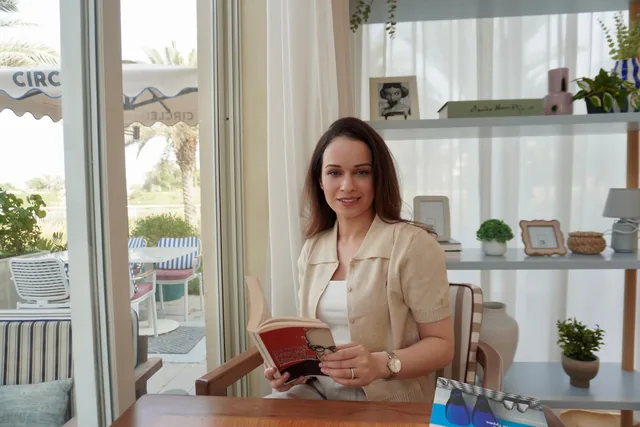
Reviewed by Komel Kaur, psychotherapist and executive coach, M.A. Psychology
Last reviewed 6 August 2026
Find your channel first
Free · 25 questions · all five ranked
Love language test
Scores words, quality time, gifts, acts of service and touch out of 20 each, so you see your lowest channel as well as your highest.
Take it free →Free · 24 questions · both dimensions scored
Attachment style quiz
Scores attachment anxiety and avoidance out of 48 each, then names the style they add up to and what it does under conflict.
Take it free →Free · 15 questions · you alone
Relationship doubt self-check
Scores satisfaction, doubt, repair after conflict, respect and loneliness. Instant result, no sign-up.
Take it free →One page per love language
What each channel looks like when it is met, when it is starved, what to ask for, and which of the other four it collides with.
Free · 15 questions · you alone
Relationship doubt self-check
Scores satisfaction, doubt, repair after conflict, respect and loneliness. Instant result, no sign-up.
Take the free check →USD 49 · both people answer
The two-sided couples tests
You each answer 44 questions privately, then get one joint report - attachment pairing, five dimensions side by side, and your three widest gaps.
Compare both tests →If the pattern you keep hitting is deeper than channels - respect, repair, or expectations that genuinely differ - the two-sided test measures those for both of you.
Read the methodology: which research each question comes from →
The five channels, one at a time
- Words of affirmation: being told, explicitly, what you mean to someone and what they noticed. This channel is starved by the assumption that love is obvious.
- Quality time: undivided attention, where you are the thing being attended to rather than the thing in the background. Erodes quietly through phones, shift work and small children.
- Receiving gifts: rarely about cost. It is evidence - proof you were in someone's mind when you were not in the room. Which is why forgotten occasions land so hard.
- Acts of service: effort that lightens your load without needing to be asked for. The channel most likely to turn into scorekeeping when it runs short.
- Physical touch: ordinary, non-sexual contact as the way closeness gets registered. The first thing to disappear under conflict, stress or illness.
Giving and receiving are usually different channels
This is the part most summaries skip, and it is where most of the trouble sits. People tend to give in the channel that comes naturally to them, which is not always the channel they need. Someone who feels loved through words may give through practical help, because that is what was modelled at home.
The result is a pair of people both working hard and both unmet. Neither is neglecting the other. Each is being generous in a currency the other does not bank, and the accumulated interpretation - that the other person does not care - is what eventually hardens into resentment.
Reading your own giving profile alongside your receiving profile is what makes that visible. It usually explains an argument the couple has been having for years without either of them recognising it.
What the research actually supports
The framework came out of counselling practice, not a research programme, and the evidence since has been mixed in an interesting way. What holds up: people reliably differ in which expressions of affection register for them, and couples who match, or who adapt towards each other's preference, tend to report somewhat higher satisfaction.
What holds up less well: the idea that everyone has exactly one primary language, and that the five categories are psychometrically distinct types. Factor analyses do not cleanly reproduce five separate boxes.
The honest reading is that this is a good map of a continuous space rather than a personality typology. That is why the test here reports five scores out of twenty each, and shows your lowest channel as prominently as your highest.
What a mismatch looks like in practice
- One person books the holiday, the other wanted an ordinary Tuesday evening with no phones.
- One person keeps the house running, the other has not been told they are admired in over a year.
- One person is affectionate in passing, the other reads only words as reassurance and hears very few.
- Both people describe the relationship as loving and both quietly wonder whether they are wanted.
Where love languages stop being the right tool
Channel mismatch explains a specific kind of unhappiness: care that is being given and not received. It does not explain contempt, dishonesty, coercion, or expectations that genuinely conflict about money, family or children. Applying it to those is how people end up working hard on the wrong problem.
If the reading you keep coming back to is that respect has gone, or that you are managing someone's reaction rather than talking to them, that is a different conversation - and the free doubt self-check measures it properly.
Common questions
What are the five love languages?
Words of affirmation, quality time, receiving gifts, acts of service and physical touch. They were described by Gary Chapman, a marriage counsellor, in 1992, based on patterns he saw repeatedly in couples work: people differ in which expressions of affection actually register for them.
How do I find out my love language?
Two questions get you most of the way. What do you notice most sharply when it is missing? And what do you instinctively do for someone you love? The first points at how you receive, the second at how you give, and they are often different channels. The free 25-question test scores all five so you can see the ranking rather than guessing at one.
Can two people have the same love language and still struggle?
Yes. A shared top channel helps, but the misses usually happen at the bottom of the list. If your lowest channel is your partner's second, they will feel the shortfall there regardless of how well the top one is served.
Is the love languages framework scientifically proven?
Partly. The underlying observation - that people differ in preferred expressions of affection, and that mismatch predicts feeling unloved - has empirical support, and some studies find higher satisfaction where partners adapt to each other's preference. The strong version, that everyone has exactly one primary language out of five discrete types, does not hold up well psychometrically. It is best used as a map, not a taxonomy.
Can your love language change over time?
Yes, and it usually does with circumstance. After illness or a period of overload, acts of service tends to rise. Through a long-distance stretch, words carry more weight. After a baby arrives, quality time becomes scarce and therefore louder. Retaking a test every year or two is reasonable.
What if my partner refuses to take it seriously?
You do not need their participation to use it. Knowing your own channel lets you make a specific request instead of a general complaint, and specific requests are much easier to say yes to. If the refusal is part of a wider pattern of dismissal, that is the more useful thing to look at.
How it works
Three steps, about five minutes.
No waiting list, no phone tag, no chasing a reply. You can have a time requested before you close this page, and nothing is paid until it is confirmed.
01
Pick a session and a time
Choose the session you want and a slot that suits you. Times are shown on your own clock, and evening slots are open.
02
Request it, no payment yet
Leave a few details and send the request. The slot is held for you while Komel confirms she is the right fit.
03
Confirm and get your Meet link
Komel sends a payment link for that session. Once it is paid, the Google Meet link lands in your inbox.
Sessions and pricing
Pick the session that fits, then a time.
Full session
60 minutes
USD 70USD 49
Your first session. USD 70 for sessions after that.
New client offerOne-off, no commitment
A complete therapy hour, one to one.
Book this →
Most chosen5-session plan
60 minutes
USD 49per session
Same price every time.
Save 30% per sessionNothing upfront, pay one session at a time
Five hours of real work at the lower rate the whole way through.
Book this →
Couples session
60 minutes, for two
USD 120USD 99
Your first session. USD 120 for sessions after that.
New client offerOne-off, no commitment
One hour with both partners on the same video call.
Book this →
From the practice
What Komel writes about, week to week.
When this is not the right fit
Komel is a psychotherapist and executive coach based in the UAE, working online worldwide. Sessions are private and self-funded, and cannot be claimed on local insurance or used for legal, medical or workplace reports. She does not prescribe or manage medication.
This is not an emergency service. If you are in immediate danger, use a local crisis line rather than a booking request. Her credentials and training and the full scope of practice are published.