Pursue and withdraw · the most common hard pairing
The anxious-avoidant relationship, and how the cycle breaks
In an anxious-avoidant relationship, one partner moves towards closeness to settle their alarm and the other steps back to settle theirs. Each response is exactly what makes the other worse, so the loop runs on its own without anyone intending it. It breaks when the pursuing partner asks directly instead of testing, and the withdrawing partner says the pause out loud instead of taking it silently.
Neither of you is doing anything unreasonable. You are each doing the one thing that most reliably makes the other worse.

Komel Kaur
Psychotherapist + Executive Coach
M.A. Psychology
CBT and DBT trained psychotherapist
5 languages
English, Hindi, Punjabi, Urdu, Kashmiri
60-minute sessions
Online video, times shown on your own clock
No payment to request
Ask for a time first, pay once it is confirmed
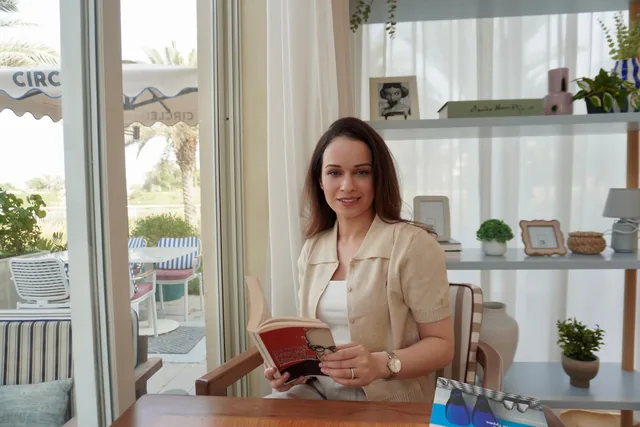
Reviewed by Komel Kaur, psychotherapist and executive coach, M.A. Psychology
Last reviewed 6 August 2026
Score both dimensions first
Free · 24 questions · both dimensions scored
Attachment style quiz
Scores attachment anxiety and avoidance out of 48 each, then names the style they add up to and what it does under conflict.
Take it free →Free · 15 questions · you alone
Relationship doubt self-check
Scores satisfaction, doubt, repair after conflict, respect and loneliness. Instant result, no sign-up.
Take it free →Free · 15 questions · you alone
Relationship doubt self-check
Scores satisfaction, doubt, repair after conflict, respect and loneliness. Instant result, no sign-up.
Take the free check →USD 49 · both people answer
The two-sided couples tests
You each answer 44 questions privately, then get one joint report - attachment pairing, five dimensions side by side, and your three widest gaps.
Compare both tests →The two-sided test scores both partners on attachment anxiety and avoidance and names the pairing, then reads conflict and repair for the two of you together.
Read the methodology: which research each question comes from →
The loop, in the order it actually runs
- Something small registers as distance - a short reply, a delayed message, an evening on a phone.
- The anxious partner moves towards it, asking for contact or reassurance. Internally this is alarm, not neediness.
- The avoidant partner feels the intensity as pressure and steps back to bring their own arousal down.
- The step back confirms the anxious partner's fear, so the ask gets louder or sharper.
- The escalation confirms the avoidant partner's sense that closeness costs too much, so the withdrawal deepens.
- One of you eventually gives up rather than resolves. Nothing has been repaired, so the next trigger starts further along.
What each person is actually experiencing
From the anxious side it feels like being the only one who cares whether the relationship is alright. The alarm is physical - it does not respond to reasoning, and waiting is genuinely harder than a difficult conversation would be.
From the avoidant side it feels like being asked for something in a moment when there is nothing available to give. Shutting down is not a decision so much as a system going offline; the flat tone that other people read as indifference is what overload looks like from outside.
Both descriptions are accurate. That is the difficulty: each person's honest account of their own experience sounds, to the other, like an excuse.
What changes it
The single highest-value change is a stated pause. 'I am not walking away from this. I need twenty minutes and then I want to finish it.' It costs the avoidant partner almost nothing and removes the abandonment signal entirely, which is the fuel for the escalation.
The second is a direct request instead of a test. 'Can you tell me we are alright' is easy to answer. Going cold to find out whether you are missed is not, and it produces the withdrawal it was checking for.
The third is doing repair when nothing is wrong. Cycles break during ordinary weeks, not mid-argument: agree the pause language in advance and it will be available when neither of you can think clearly.
When to bring in a third person
If the same argument has run for more than a year without either of you being able to describe the other's half of it charitably, the loop has usually outgrown self-help. Couples work is largely about slowing that exchange down enough for both people to see it happening.
Bring it forward if either of you is now avoiding the other, if contempt has entered the tone, or if either of you is frightened. That last one is a safety matter and takes precedence over anything on this page.
Common questions
Why do anxious and avoidant people attract each other?
Partly because the early dynamic feels familiar to both. The anxious partner recognises the effort of earning closeness; the avoidant partner recognises being wanted without having to be fully available. It reads as intensity rather than as strain, which is why the pairing is common rather than rare.
Can an anxious-avoidant relationship work?
Yes, and many do. What separates the ones that work is not less anxiety or less avoidance, it is whether both people can see the loop rather than only the other person's half of it. Once each response is understood as regulation instead of rejection, the same two people behave differently in the same argument.
What does the avoidant partner need to change?
Mainly to narrate the withdrawal. 'I need twenty minutes and then I want to finish this' is a completely different signal from going quiet, even though it feels like the same act from inside. Silence is read as an exit; a stated pause is not.
What does the anxious partner need to change?
Mainly to ask directly rather than test. Testing - hinting, going cold to see if they follow, raising the stakes to force a response - is the part that reliably produces the withdrawal it fears. Direct requests are harder to make and much easier to answer.
Is it the avoidant partner's fault?
No, and neither is it the anxious partner's. That framing is the loop in argument form. Both strategies were sensible adaptations to earlier environments, and both are being aimed at someone who is not that environment.
How do I know if this is our pattern?
The signature is that conflict escalates in intensity for one of you and drops to silence for the other, at the same moment. Score both dimensions on the free attachment quiz; if one of you is high on anxiety and the other high on avoidance, this is likely the loop you are in.
When is it not attachment at all?
When the withdrawal includes stonewalling as punishment, when there is contempt, or when either of you is frightened. Those are not regulation strategies and reframing them as attachment can keep someone in a situation that needs a different kind of help.
How it works
Three steps, about five minutes.
No waiting list, no phone tag, no chasing a reply. You can have a time requested before you close this page, and nothing is paid until it is confirmed.
01
Pick a session and a time
Choose the session you want and a slot that suits you. Times are shown on your own clock, and evening slots are open.
02
Request it, no payment yet
Leave a few details and send the request. The slot is held for you while Komel confirms she is the right fit.
03
Confirm and get your Meet link
Komel sends a payment link for that session. Once it is paid, the Google Meet link lands in your inbox.
Sessions and pricing
Pick the session that fits, then a time.
Full session
60 minutes
USD 70USD 49
Your first session. USD 70 for sessions after that.
New client offerOne-off, no commitment
A complete therapy hour, one to one.
Book this →
Most chosen5-session plan
60 minutes
USD 49per session
Same price every time.
Save 30% per sessionNothing upfront, pay one session at a time
Five hours of real work at the lower rate the whole way through.
Book this →
Couples session
60 minutes, for two
USD 120USD 99
Your first session. USD 120 for sessions after that.
New client offerOne-off, no commitment
One hour with both partners on the same video call.
Book this →
From the practice
What Komel writes about, week to week.
When this is not the right fit
Komel is a psychotherapist and executive coach based in the UAE, working online worldwide. Sessions are private and self-funded, and cannot be claimed on local insurance or used for legal, medical or workplace reports. She does not prescribe or manage medication.
This is not an emergency service. If you are in immediate danger, use a local crisis line rather than a booking request. Her credentials and training and the full scope of practice are published.