Attachment · low anxiety, low avoidance
Secure attachment: what it actually looks like, and how people get there
Secure attachment is low attachment anxiety together with low avoidance: you can want someone without monitoring them, and depend on them without feeling exposed. It does not mean calm, conflict-free or unbothered. It means the relationship itself is not what feels at risk during a difficult conversation, so a complaint can be about the thing being complained about. Roughly half of adults score in this region, and a meaningful share of them did not start there.
The clearest test of security is not how you are on a good week. It is how fast you recover after a bad conversation.

Komel Kaur
Psychologist + Executive Coach
M.A. Psychology
CBT and DBT trained psychologist
5 languages
English, Hindi, Punjabi, Urdu, Kashmiri
60-minute sessions
Online video, times shown on your own clock
No payment to request
Ask for a time first, pay once it is confirmed
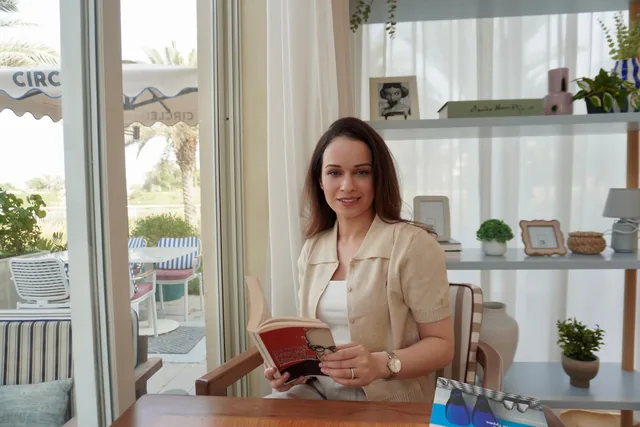
Reviewed by Komel Kaur, psychologist and executive coach, M.A. Psychology
Last reviewed 20 August 2026
Where this pattern sits
Check where you actually sit, free
Free · 24 questions · both dimensions scored
Attachment style quiz
Scores attachment anxiety and avoidance out of 48 each, then names the style they add up to and what it does under conflict.
Take it free →Free · 15 questions · you alone
Relationship doubt self-check
Scores satisfaction, doubt, repair after conflict, respect and loneliness. Instant result, no sign-up.
Take it free →One page per attachment style
Anxious attachment
High anxiety, low avoidance. Closeness is wanted and distance reads as danger.
Read the page →Avoidant attachment
High avoidance. Closeness is wanted but depending on someone feels like exposure.
Read the page →Fearful-avoidant attachment
High on both dimensions. Closeness is wanted and treated as unsafe at the same time.
Read the page →Free · 15 questions · you alone
Relationship doubt self-check
Scores satisfaction, doubt, repair after conflict, respect and loneliness. Instant result, no sign-up.
Take the free check →USD 49 · both people answer
The two-sided couples tests
You each answer 44 questions privately, then get one joint report - attachment pairing, five dimensions side by side, and your three widest gaps.
Compare both tests →Security helps most when it is read as a pairing. The two-sided test scores both of you on the same dimensions and reports the combination.
Read the methodology: which research each question comes from →
What secure attachment looks like in practice
It shows up as timing and repair, not as being unbothered.
- Problems get raised reasonably early, while they are still small enough to be about one thing.
- A complaint can be heard as a complaint rather than as a verdict on whether you are wanted.
- Reassurance is accepted and then stays accepted, because the alarm it answered was not running on a loop.
- Time apart is not read as a signal. Neither is a slow reply.
- Recovery takes hours rather than days, and the repair is usually explicit: something is said about what happened.
What it is not
Security is not the same as being easygoing, and not the same as never being anxious.
Plenty of people who read as relaxed are scoring high on avoidance rather than low on anxiety. Not being visibly upset during conflict can mean the alarm is not ringing, or it can mean the alarm gets handled by leaving the room internally. Those two look similar from the outside and behave completely differently over years.
Security is also not permanent or global. Attachment behaviour is partly relationship-specific, so a genuinely unpredictable partner will produce vigilance in someone who has been secure in every previous relationship. That is worth reading as information about the situation rather than as a new label for the person.
And security does not mean self-sufficiency. It is closer to the opposite. The defining move is being able to ask for something plainly and to tolerate the answer either way.
What do you want to do?
Earned security: how people get here
Longitudinal research finds real movement toward security in adulthood.
- A long relationship with a partner who stays reachable during conflict is the most common route, and it works slowly, over months rather than weeks.
- Therapy accelerates it, particularly where the pattern predates the current relationship and keeps reappearing with different people.
- Change shows up first as faster recovery, not as a different result on a quiz. The reaction still arrives; the time between the reaction and repair shortens.
- Practising the two mechanical skills does most of the work: naming a feeling before acting on it, and announcing a pause instead of just taking one.
Secure with an anxious or avoidant partner
Security helps, but it does not neutralise a pairing on its own.
Paired with an anxious partner, the secure person tends to become the source of all reassurance, and the reassurance keeps being needed because it is answering the sentence rather than the alarm. Paired with an avoidant partner, they end up doing all the reaching, and eventually stop, which the avoidant partner reads as confirmation that closeness was conditional.
Both of those are pairing effects rather than facts about either person, which is exactly why they are hard to see from inside one half of them. Naming the loop is usually enough to stop it hardening into a story about the other person's character.
Common questions
What are the signs of secure attachment?
Raising problems early, hearing a complaint without it becoming about your worth, accepting reassurance and having it hold, not reading time apart or a slow reply as a signal, and recovering within hours rather than days with some explicit repair.
How do I know if I am securely attached?
By where you sit on both dimensions rather than by how calm you feel. The free attachment style quiz scores attachment anxiety and avoidance separately out of 48 each, and secure is the low-low region. Scoring low on anxiety while high on avoidance is a different pattern that often gets mistaken for security.
Can you become securely attached later in life?
Yes. This is usually called earned security. Longitudinal research finds meaningful movement, most often through a long relationship with a consistently responsive partner, or through therapy. It tends to show up first as recovering faster after conflict rather than as never reacting.
Is secure attachment the same as never being anxious in a relationship?
No. Secure people still get hurt, still get jealous occasionally and still have bad conversations. The difference is that the relationship itself does not feel at stake each time, so the reaction stays proportionate to the thing that caused it.
How common is secure attachment?
Population estimates from adult attachment research typically put a bit over half of adults in the secure region, though figures vary by sample and by how the dimensions are cut. It is the most common pattern, not a rare achievement.
Can a secure person become anxious with the wrong partner?
Yes. Attachment behaviour is partly specific to the relationship. Genuine unpredictability, dishonesty or an unexplained ending can raise attachment anxiety in someone who has always scored low, which is why a result is best read as a description of the present rather than a permanent trait.
How it works
Three steps, about five minutes.
No waiting list, no phone tag, no chasing a reply. You can have a time requested before you close this page, and nothing is paid until it is confirmed.
01
Pick a session and a time
Choose the session you want and a slot that suits you. Times are shown on your own clock, and evening slots are open.
02
Request it, no payment yet
Leave a few details and send the request. The slot is held for you while Komel confirms she is the right fit.
03
Confirm and get your Meet link
Komel sends a payment link for that session. Once it is paid, the Google Meet link lands in your inbox.
Sessions and pricing
Pick the session that fits, then a time.
Full session
60 minutes
USD 70USD 49
Your first session. USD 70 for sessions after that.
New client offerOne-off, no commitment
A complete therapy hour, one to one.
Book this →
Most chosen5-session plan
60 minutes
USD 49per session
Same price every time.
Save 30% per sessionPaid upfront, covers all five sessions
Five hours of real work at the lower rate the whole way through.
Book this →
Couples session
60 minutes, for two
USD 120USD 99
Your first session. USD 120 for sessions after that.
New client offerOne-off, no commitment
One hour with both partners on the same video call.
Book this →
From the practice
What Komel writes about, week to week.
When this is not the right fit
Komel is a psychologist and executive coach based in the UAE, working online worldwide. Sessions are private and self-funded, and cannot be claimed on local insurance or used for legal, medical or workplace reports. She does not prescribe or manage medication.
This is not an emergency service. If you are in immediate danger, use a local crisis line rather than a booking request. Her credentials and training and the full scope of practice are published.