Type matching · what the evidence says
Personality type compatibility: what 16-type matching can and cannot tell you
Sixteen-type compatibility charts are popular because they are fun and legible, but type matching is a weak predictor of relationship outcomes. What personality research does support is narrower and more useful: high neuroticism in either partner and low agreeableness or conscientiousness track dissatisfaction, while similarity of type does not reliably track anything. Attachment pattern and conflict behaviour predict far more than a four-letter code.
Type charts are fun and legible. They are also poor predictors. What predicts outcomes is behaviour under conflict, not a four-letter code.

Komel Kaur
Psychotherapist + Executive Coach
M.A. Psychology
CBT and DBT trained psychotherapist
5 languages
English, Hindi, Punjabi, Urdu, Kashmiri
60-minute sessions
Online video, times shown on your own clock
No payment to request
Ask for a time first, pay once it is confirmed
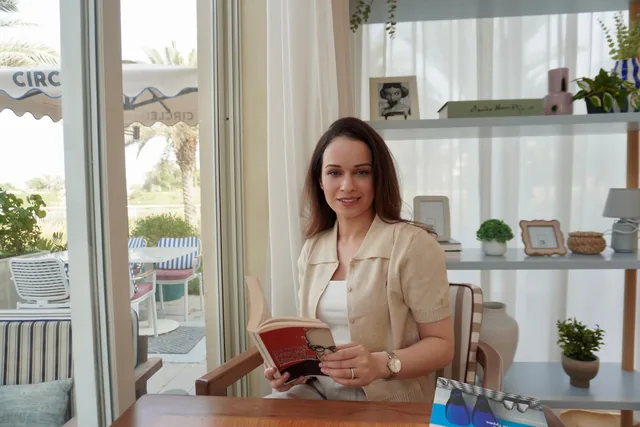
Reviewed by Komel Kaur, psychotherapist and executive coach, M.A. Psychology
Last reviewed 6 August 2026
Better-evidenced places to start
Free · 25 questions · all five ranked
Love language test
Scores words, quality time, gifts, acts of service and touch out of 20 each, so you see your lowest channel as well as your highest.
Take it free →Free · 24 questions · both dimensions scored
Attachment style quiz
Scores attachment anxiety and avoidance out of 48 each, then names the style they add up to and what it does under conflict.
Take it free →Free · 15 questions · you alone
Relationship doubt self-check
Scores satisfaction, doubt, repair after conflict, respect and loneliness. Instant result, no sign-up.
Take it free →Free · 15 questions · you alone
Relationship doubt self-check
Scores satisfaction, doubt, repair after conflict, respect and loneliness. Instant result, no sign-up.
Take the free check →USD 49 · both people answer
The two-sided couples tests
You each answer 44 questions privately, then get one joint report - attachment pairing, five dimensions side by side, and your three widest gaps.
Compare both tests →The two-sided test measures attachment pairing, conflict and repair, trust, closeness and shared direction - and reads the gap between your two sets of answers.
Read the methodology: which research each question comes from →
Why type matching feels more powerful than it is
A four-letter code is memorable, symmetrical and immediately shareable, and it produces a compatibility grid you can look yourself up in. That is a genuinely satisfying product. It is also where most of the appeal comes from.
The measurement problems are well documented: the type instrument's test-retest reliability is modest, so a meaningful proportion of people receive a different type on a second sitting. And splitting a continuous trait at a midpoint throws away most of the signal - someone marginally on one side is treated identically to someone at the extreme.
Compatibility grids inherit both problems and add a third, since the pairings themselves were not derived from outcome data on real couples.
What personality research does support
- Neuroticism is the most consistent trait-level predictor: higher emotional reactivity in either partner predicts lower satisfaction for both, across many longitudinal samples.
- Low agreeableness and low conscientiousness show smaller but replicable effects, plausibly through their behavioural consequences rather than directly.
- Trait similarity predicts little. Couples do not need matching profiles; they need workable handling of the differences they have.
- Behaviour beats traits. How conflict is conducted and repaired accounts for far more variance in outcomes than either partner's trait profile.
Measure the things that move
Personality is relatively stable, which makes it a poor target even where it does predict something. Attachment pattern, conflict behaviour and stated expectations all shift with awareness and effort - and they are also what predicts more.
That is the design logic of the assessments here. The free attachment quiz scores the two dimensions that govern behaviour under closeness. The two-sided test measures attachment pairing, conflict and repair, trust, closeness and shared direction, and reads the gap between two people's answers rather than either profile alone.
Using type language without being misled by it
There is a reasonable use for it. If 'I am the one who needs to plan and you are the one who decides on the day' is a shared shorthand that lets you name a friction without either person becoming the problem, it is doing useful work.
The point at which it becomes harmful is when it is used as a verdict - staying because a chart said you were an ideal pairing, or leaving because it said you were not. Neither decision has any evidential support behind it.
Common questions
Is MBTI compatibility real?
The four-letter framework is genuinely popular and does capture real differences in preference, but its compatibility claims are not well supported. The type instrument has known reliability problems - a meaningful share of people get a different result on retest - and dividing continuous traits into binary letters discards most of the information. Compatibility charts built on top of that are best treated as entertainment.
Do opposites attract, or are similar people more compatible?
Neither, mostly. Decades of research finds similarity of personality is a weak predictor of satisfaction in either direction. What does predict it is how a couple behaves - whether conflict gets repaired, whether respect holds, whether expectations line up - rather than how alike their trait profiles look.
Which personality traits actually predict relationship problems?
The most consistent finding is neuroticism: higher emotional reactivity in either partner predicts lower satisfaction for both. Low agreeableness and low conscientiousness show smaller but real effects. None of these is destiny, and all of them matter less than what the couple does in conflict.
So personality is irrelevant to compatibility?
Not irrelevant, just less decisive than the charts suggest. Personality shapes friction - how quickly one of you escalates, how much structure one of you needs, how much social contact feels right. It just does not tell you whether the relationship works, because that is determined by how the friction gets handled.
What should we take instead?
Attachment style is the better-evidenced individual measure, because it predicts behaviour when closeness is at stake. Beyond that, the things worth measuring are two-sided: conflict and repair, trust, shared direction, and explicit expectations about money, family, children and where you live.
Why do type descriptions feel so accurate?
Largely because they are written to be broadly agreeable, an effect known since Forer's 1949 demonstration that people rate generic profiles as highly personally accurate. Feeling recognised by a description is not evidence that it predicts anything about a relationship.
How it works
Three steps, about five minutes.
No waiting list, no phone tag, no chasing a reply. You can have a time requested before you close this page, and nothing is paid until it is confirmed.
01
Pick a session and a time
Choose the session you want and a slot that suits you. Times are shown on your own clock, and evening slots are open.
02
Request it, no payment yet
Leave a few details and send the request. The slot is held for you while Komel confirms she is the right fit.
03
Confirm and get your Meet link
Komel sends a payment link for that session. Once it is paid, the Google Meet link lands in your inbox.
Sessions and pricing
Pick the session that fits, then a time.
Full session
60 minutes
USD 70USD 49
Your first session. USD 70 for sessions after that.
New client offerOne-off, no commitment
A complete therapy hour, one to one.
Book this →
Most chosen5-session plan
60 minutes
USD 49per session
Same price every time.
Save 30% per sessionNothing upfront, pay one session at a time
Five hours of real work at the lower rate the whole way through.
Book this →
Couples session
60 minutes, for two
USD 120USD 99
Your first session. USD 120 for sessions after that.
New client offerOne-off, no commitment
One hour with both partners on the same video call.
Book this →
From the practice
What Komel writes about, week to week.
When this is not the right fit
Komel is a psychotherapist and executive coach based in the UAE, working online worldwide. Sessions are private and self-funded, and cannot be claimed on local insurance or used for legal, medical or workplace reports. She does not prescribe or manage medication.
This is not an emergency service. If you are in immediate danger, use a local crisis line rather than a booking request. Her credentials and training and the full scope of practice are published.