Free · 15 questions · no verdict, a reading
Should we break up? A quiz that gives you a reading, not a verdict
No quiz can decide whether to end a relationship, and one that returns a verdict is inventing certainty it does not have. What a good quiz can do is separate the things that are usually tangled together: how satisfied you are, whether conflict ever gets repaired, whether respect is intact, and whether you are lonely inside the relationship. Those four have different answers, and only one of them is usually the actual problem.
The useful question is not whether to leave. It is which of four things is generating the doubt - because they need different answers.

Komel Kaur
Psychotherapist + Executive Coach
M.A. Psychology
CBT and DBT trained psychotherapist
5 languages
English, Hindi, Punjabi, Urdu, Kashmiri
60-minute sessions
Online video, times shown on your own clock
No payment to request
Ask for a time first, pay once it is confirmed
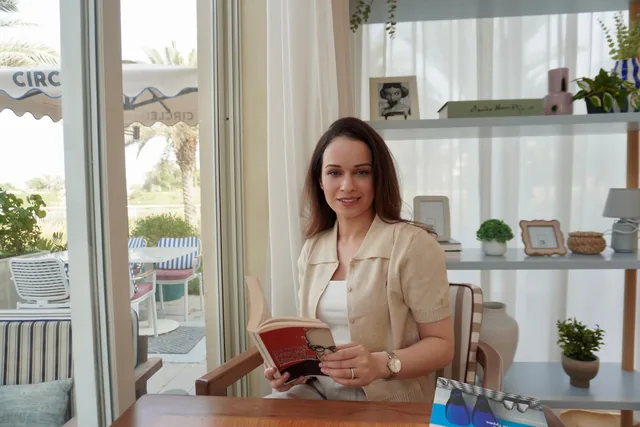
Reviewed by Komel Kaur, psychotherapist and executive coach, M.A. Psychology
Last reviewed 6 August 2026
Start with the free self-check
Free · 24 questions · both dimensions scored
Attachment style quiz
Scores attachment anxiety and avoidance out of 48 each, then names the style they add up to and what it does under conflict.
Take it free →Free · 15 questions · you alone
Relationship doubt self-check
Scores satisfaction, doubt, repair after conflict, respect and loneliness. Instant result, no sign-up.
Take it free →Free · 15 questions · you alone
Relationship doubt self-check
Scores satisfaction, doubt, repair after conflict, respect and loneliness. Instant result, no sign-up.
Take the free check →USD 49 · both people answer
The two-sided couples tests
You each answer 44 questions privately, then get one joint report - attachment pairing, five dimensions side by side, and your three widest gaps.
Compare both tests →If you want the comparison rather than your own side of it, the two-sided test has you both answer privately and reports your three widest gaps.
Read the methodology: which research each question comes from →
The four things the question is usually made of
- Satisfaction: how the relationship actually is on ordinary days, separate from how it is in the worst hour of a bad week.
- Repair: whether an argument ends in reconnection or just stops. This is the strongest single indicator, and the one people most often overlook.
- Respect: whether you are still spoken to and thought of as an equal. Contempt is the pattern the conflict research treats most seriously.
- Loneliness: whether you are alone inside the relationship. This is the one most likely to be mistaken for wanting to leave, when what is missing is being known.
Doubt that is information, and doubt that is anxiety
Doubt that behaves like information is stable. It is about something specific, it survives good weeks, it shows up in more than one setting, and it usually has a shape you can say out loud: we want different things about children, or nothing has been repaired properly in eighteen months.
Doubt that behaves like anxiety spikes and settles. It tends to arrive after closeness rather than after conflict, it attaches to whatever is available - their looks, their job, a detail about their family - and it responds to reassurance for a few hours before returning.
Both are worth taking seriously; they need opposite responses. The first needs a decision. The second needs treating, and acting on it as though it were the first is how people leave relationships they were not actually unhappy in.
Before you decide anything
- Take the reading on a normal day. Deciding in the hour after a fight measures the fight, not the relationship.
- Ask what has actually been said out loud. Many relationships get ended over an expectation that was never once stated plainly.
- Rule out the flattening. If food, work, friends and sleep have all gone grey too, the relationship may not be the thing that changed.
- Separate the fear of the aftermath from the answer. Dreading the logistics, the families and the loneliness is not evidence that you should stay - it is just what the aftermath is.
What the free check gives you
Fifteen questions, about three minutes, one person. It scores the four areas above plus overall doubt, places you in a band, and names which area is carrying most of the weight. There is no verdict and no percentage, because neither would be honest.
It also routes on safety rather than scoring it: if any answer indicates fear or coercion, the result points to support instead of a band.
Common questions
Can a quiz tell me whether to break up?
No, and it should not try. What it can do is tell you which part of the relationship is generating the doubt - dissatisfaction, an absence of repair after conflict, eroded respect, or loneliness. People often discover the thing they were about to end the relationship over is not the thing scoring worst.
Is it normal to have doubts in a relationship?
Yes. Doubt is close to universal and does not predict much on its own. What carries more information is whether the doubt is stable or episodic, whether it survives good weeks, and whether repair still works after an argument. Doubt that clears after a decent conversation is different from doubt that has not shifted in a year.
How do I know if it is the relationship or me?
Depression, burnout and anxiety all flatten enjoyment and closeness in a way that reads exactly like a failing relationship. A useful check is whether other things you used to enjoy have also gone flat. If they have, treating that first often changes the relationship question entirely.
What is the strongest sign a relationship is over?
Research on conflict points at contempt - sarcasm, eye-rolling, treating a partner as beneath you - as the most corrosive pattern, and at the loss of repair attempts as the most telling. When neither person tries to de-escalate any more, or the attempts no longer land, the relationship has usually stopped self-correcting.
Should both of us take it?
You can each take the free check separately, and comparing is informative. If you want a structured version of that comparison, the two-sided test is built for it: you each answer 44 questions privately and get one joint report with your three widest gaps.
What if I am afraid of my partner?
Then this is not a compatibility question and no quiz is the right tool. Fear of a partner, being prevented from leaving, or being controlled financially or socially all need specialist support. The crisis resources on this site list where to start, and safety comes before any assessment.
How it works
Three steps, about five minutes.
No waiting list, no phone tag, no chasing a reply. You can have a time requested before you close this page, and nothing is paid until it is confirmed.
01
Pick a session and a time
Choose the session you want and a slot that suits you. Times are shown on your own clock, and evening slots are open.
02
Request it, no payment yet
Leave a few details and send the request. The slot is held for you while Komel confirms she is the right fit.
03
Confirm and get your Meet link
Komel sends a payment link for that session. Once it is paid, the Google Meet link lands in your inbox.
Sessions and pricing
Pick the session that fits, then a time.
Full session
60 minutes
USD 70USD 49
Your first session. USD 70 for sessions after that.
New client offerOne-off, no commitment
A complete therapy hour, one to one.
Book this →
Most chosen5-session plan
60 minutes
USD 49per session
Same price every time.
Save 30% per sessionNothing upfront, pay one session at a time
Five hours of real work at the lower rate the whole way through.
Book this →
Couples session
60 minutes, for two
USD 120USD 99
Your first session. USD 120 for sessions after that.
New client offerOne-off, no commitment
One hour with both partners on the same video call.
Book this →
From the practice
What Komel writes about, week to week.
When this is not the right fit
Komel is a psychotherapist and executive coach based in the UAE, working online worldwide. Sessions are private and self-funded, and cannot be claimed on local insurance or used for legal, medical or workplace reports. She does not prescribe or manage medication.
This is not an emergency service. If you are in immediate danger, use a local crisis line rather than a booking request. Her credentials and training and the full scope of practice are published.