Two-sided · 44 questions each · start free
Relationship compatibility test for two people
A compatibility test is only as good as the number of people it measures. This one asks both partners to answer 44 questions privately, scores each of you separately across attachment, communication and repair, trust, closeness, conflict handling and shared direction, then reports the gap between your two readings. Start free; USD 49 is only due once both sides are in. Every dimension maps to a published instrument or research programme, and every item was reviewed by a practising psychotherapist.
Both of you answer privately. One joint report, built on published relationship science and reviewed by a practising psychotherapist. USD 49 unlocks the report once both sides are in.

Komel Kaur
Psychotherapist + Executive Coach
M.A. Psychology
CBT and DBT trained psychotherapist
5 languages
English, Hindi, Punjabi, Urdu, Kashmiri
60-minute sessions
Online video, times shown on your own clock
No payment to request
Ask for a time first, pay once it is confirmed
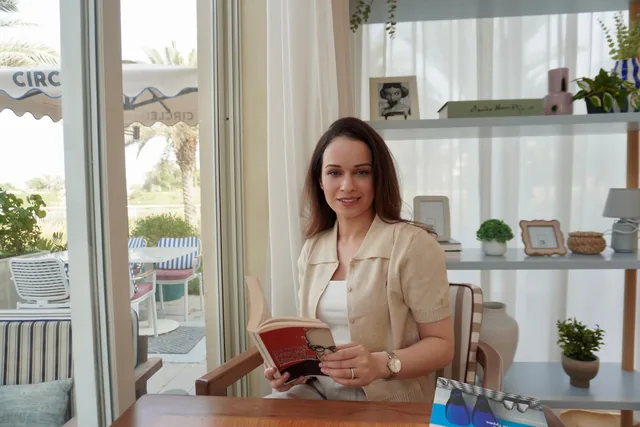
Reviewed by Komel Kaur, psychotherapist and executive coach, M.A. Psychology
Last reviewed 5 August 2026
USD 49 · both people answer
The two-sided couples tests
You each answer 44 questions privately, then get one joint report - attachment pairing, five dimensions side by side, and your three widest gaps.
Compare both tests →Free · 15 questions · you alone
Relationship doubt self-check
Scores satisfaction, doubt, repair after conflict, respect and loneliness. Instant result, no sign-up.
Take the free check →Already together and want a check-in? Take the Couples Relationship Test. Deciding whether to marry? The Marriage Compatibility Test weights shared direction more heavily.
Read the methodology: which research each question comes from →
Why most online compatibility tests do not work
Search for a compatibility test and you will mostly find single-person quizzes that hand back a percentage. Two problems make those close to meaningless. One person answers, so the score records one person's perception of a two-person system. And the output is a number with no construct behind it - nothing tells you whether 72% describes trust, conflict, or a shared sense of the future.
Self-report on relationships is also biased in known directions. People reliably over-report their own accommodation and repair attempts and under-report their own withdrawal. That bias does not disappear when you score one person more carefully; it disappears when you score both people and compare.
What this test measures
- Attachment anxiety and avoidance - how each of you responds to distance and to closeness, reported as a pairing rather than a single score, because the combination is what matters clinically.
- Communication and repair - whether hard things get said, heard, and put back together afterwards.
- Trust and security - reliability, transparency, and the absence of quiet suspicion.
- Closeness and affection - emotional and physical warmth, and how freely it is offered.
- Conflict handling - what each of you actually does when the temperature rises, including the criticism, contempt, defensiveness and stonewalling patterns that predict distress.
- Shared direction - money, family, children, faith, place, roles and career: the practical life you are agreeing to.
The gap is the finding
The most useful line in the report is rarely a score. It is a distance. When one partner rates conflict repair high and the other rates it low, the disagreement itself is the information: one of you believes fights end resolved and the other has been carrying them.
We surface the three widest gaps and attach a structured conversation to each, because a named gap with a script is actionable in a way that a percentage never is. Where both of you read a dimension the same way, that is reported too - couples routinely underestimate what is already working.
The research behind it
The instrument does not claim originality. It claims traceability: every dimension maps to work you can read yourself, and the full citation list is published on the methodology page rather than hinted at in marketing copy.
- Attachment anxiety and avoidance - Experiences in Close Relationships (ECR / ECR-R) tradition.
- Relationship satisfaction - Relationship Assessment Scale (RAS).
- Commitment, alternatives and investment - Investment Model Scale.
- Conflict process, contempt and repair - Gottman's observational conflict research.
- Trust and responsiveness - Interpersonal trust and perceived-responsiveness research.
- Expectation congruence (money, family, children, faith, roles, career) - Premarital expectation and role-congruence research.
- The four adult attachment styles as quadrants of two dimensions - Adult attachment categories.
- Expression and receipt of affection (the five love languages) - Chapman's five love languages framework.
What it will not do
- It will not diagnose either of you with anything.
- It will not predict whether you will stay together. Research describes risk patterns across large samples; it cannot forecast one couple.
- It will not tell you who is right, and it does not pick a side.
- It is not a safety assessment. Where there is fear, coercion or control, please contact local support services rather than starting with a questionnaire.
Common questions
What makes this compatibility test accurate?
Two things. First, the constructs are drawn from established relationship science rather than invented for the web: attachment from the ECR tradition, satisfaction from the Relationship Assessment Scale, commitment and alternatives from the investment model, and conflict, contempt and repair from Gottman's observational research. Second, both partners answer, so the result is not one person's perception scored twice.
Is this a scientifically validated test?
The constructs and item design come from validated instruments, and a practising psychotherapist reviewed every item and band. The assembled questionnaire has not been through its own independent validation study, so we call it evidence-based and clinician-reviewed rather than a validated clinical instrument. The full methodology and citations are published.
How long does it take?
Each person needs about 12 to 15 minutes. You do not have to do it at the same time or in the same country - each partner gets a private link, and the joint report unlocks when the second person finishes.
Will my partner see my answers?
No. Neither of you sees the other's raw answers. The report carries scores, bands, gaps and written readings, never a transcript of who said what.
What do we actually receive?
One joint report: your attachment pairing and what it tends to produce under stress, all dimensions scored side by side, the three widest gaps between you, a structured conversation for each gap, and an honest read on what looks solid.
How much does it cost?
Start free. USD 49 for both people and the joint report is only due once both of you have answered - one payment, not one each.
Can we use it if we are long-distance or newly together?
Yes. It measures how the relationship currently works rather than how long it has existed. Couples in the first year often find the shared-direction dimension the most useful part.
How it works
Three steps, about five minutes.
No waiting list, no phone tag, no chasing a reply. You can have a time requested before you close this page, and nothing is paid until it is confirmed.
01
Pick a session and a time
Choose the session you want and a slot that suits you. Times are shown on your own clock, and evening slots are open.
02
Request it, no payment yet
Leave a few details and send the request. The slot is held for you while Komel confirms she is the right fit.
03
Confirm and get your Meet link
Komel sends a payment link for that session. Once it is paid, the Google Meet link lands in your inbox.
Sessions and pricing
Pick the session that fits, then a time.
Full session
60 minutes
USD 70USD 49
Your first session. USD 70 for sessions after that.
New client offerOne-off, no commitment
A complete therapy hour, one to one.
Book this →
Most chosen5-session plan
60 minutes
USD 49per session
Same price every time.
Save 30% per sessionNothing upfront, pay one session at a time
Five hours of real work at the lower rate the whole way through.
Book this →
Couples session
60 minutes, for two
USD 120USD 99
Your first session. USD 120 for sessions after that.
New client offerOne-off, no commitment
One hour with both partners on the same video call.
Book this →
From the practice
What Komel writes about, week to week.
When this is not the right fit
Komel is a psychotherapist and executive coach based in the UAE, working online worldwide. Sessions are private and self-funded, and cannot be claimed on local insurance or used for legal, medical or workplace reports. She does not prescribe or manage medication.
This is not an emergency service. If you are in immediate danger, use a local crisis line rather than a booking request. Her credentials and training and the full scope of practice are published.