Pre-marital · both people answer · start free
Pre-marital compatibility test
A useful pre-marital compatibility test does not score romance. It surfaces the specific expectations that couples discover too late: money and its transparency, how much say each family will have, children and their timing, where you will live, whose career moves, faith practice, and how conflict is handled. Both people answer privately, and the report sorts each expectation as aligned, negotiable or in conflict. Start free; USD 49 is only due once both sides are in.
Find the conversations you have been assuming, while they are still conversations. USD 49 unlocks the joint report once both sides are in.

Komel Kaur
Psychotherapist + Executive Coach
M.A. Psychology
CBT and DBT trained psychotherapist
5 languages
English, Hindi, Punjabi, Urdu, Kashmiri
60-minute sessions
Online video, times shown on your own clock
No payment to request
Ask for a time first, pay once it is confirmed
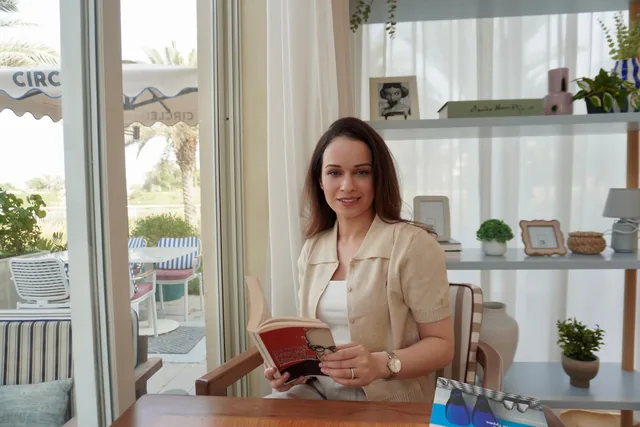
Reviewed by Komel Kaur, psychotherapist and executive coach, M.A. Psychology
Last reviewed 5 August 2026
USD 49 · both people answer
The two-sided couples tests
You each answer 44 questions privately, then get one joint report - attachment pairing, five dimensions side by side, and your three widest gaps.
Compare both tests →Free · 15 questions · you alone
Relationship doubt self-check
Scores satisfaction, doubt, repair after conflict, respect and loneliness. Instant result, no sign-up.
Take the free check →The Marriage Compatibility Test is the pre-marital version and weights shared direction most heavily. If you are already married or long-settled, the Couples Relationship Test is the better fit.
Read the methodology: which research each question comes from →
What actually causes trouble in the first years
The topics that strain new marriages are rarely exotic. They are money and how openly it is discussed, how much authority each family holds over decisions, whether and when to have children, whose career sets the location, how faith is practised in a shared home, and what each person does when a conflict starts.
Most couples have talked about a few of these and assumed the rest. Assumption is not the same as agreement, and it holds up until the first real decision - a job offer in another country, a parent who needs care, a pregnancy - forces the difference into the open.
How the report sorts your answers
- Aligned - you both answered in the same direction with similar strength. Named explicitly, because knowing what is settled is as useful as knowing what is not.
- Negotiable - you differ, but not in a way that is structurally hard. These come with a conversation and usually resolve in one sitting.
- In conflict - you differ on something that will require an actual decision, not a compromise in the abstract. Each one gets a structured conversation and a note on what tends to make it harder if left.
Beyond logistics: how you will handle the hard days
Agreeing on money and geography is necessary and not sufficient. Two people can align on every practical question and still struggle, because what determines the texture of a marriage is how each person behaves under stress.
So the test also measures attachment anxiety and avoidance - how each of you reacts to distance and to closeness - and the conflict patterns that longitudinal research links to distress: criticism aimed at character, contempt, defensiveness and stonewalling. It also measures repair, which is the strongest protective factor in that literature. Couples who argue and repair well tend to do fine. Couples who never argue and never repair often do not.
Who this is for
- Couples engaged or considering engagement who want the honest version before the deposits are paid.
- Couples in the second or third year deciding whether to marry, where the relationship works but the expectations have never been laid out.
- Long-distance and cross-border couples, where geography, visas and family proximity are not abstractions.
- Indian and South Asian couples navigating two families' expectations alongside their own - see the arranged-marriage version if the introduction was through families.
- Couples about to start pre-marital counselling who want to arrive with the topics already found.
Common questions
What is a pre-marital compatibility test?
A structured way for two people considering marriage to compare expectations before they are committed to them. Rather than producing a match percentage, it asks each person separately about money, family involvement, children, location, career, faith practice, closeness and conflict, then reports where the two sets of answers agree and where they do not.
Is it accurate?
The dimensions come from published relationship research - attachment measurement, the Relationship Assessment Scale, the investment model, and Gottman's conflict findings - and a practising psychotherapist reviewed every item. It is honest about being a structured assessment rather than a validated clinical instrument, and the full methodology and citations are published.
Should we take it before or after getting engaged?
Either works, and earlier gives you more room. Couples who take it before engagement tend to use it to decide; couples who take it after use it to prepare. The content is the same.
What if the report shows we are in conflict on something big?
That is the point of taking it early. A conflict named nine months before a wedding is a conversation. The same conflict discovered two years into a marriage is usually a crisis. Each conflict in the report comes with a structured conversation to have.
Does it replace pre-marital counselling?
No - it makes counselling faster. Most pre-marital sessions spend their first hours finding the topics. Arriving with a report means starting at the third session's depth.
Do we both have to be in the same place?
No. Each person gets a private link and can answer from any country or timezone. The joint report unlocks when the second person finishes.
How much is it and who pays?
Start free. USD 49 once, covering both people and the joint report, is only due once both of you have answered. Either of you can pay; the other just needs their link.
How it works
Three steps, about five minutes.
No waiting list, no phone tag, no chasing a reply. You can have a time requested before you close this page, and nothing is paid until it is confirmed.
01
Pick a session and a time
Choose the session you want and a slot that suits you. Times are shown on your own clock, and evening slots are open.
02
Request it, no payment yet
Leave a few details and send the request. The slot is held for you while Komel confirms she is the right fit.
03
Confirm and get your Meet link
Komel sends a payment link for that session. Once it is paid, the Google Meet link lands in your inbox.
Sessions and pricing
Pick the session that fits, then a time.
Full session
60 minutes
USD 70USD 49
Your first session. USD 70 for sessions after that.
New client offerOne-off, no commitment
A complete therapy hour, one to one.
Book this →
Most chosen5-session plan
60 minutes
USD 49per session
Same price every time.
Save 30% per sessionNothing upfront, pay one session at a time
Five hours of real work at the lower rate the whole way through.
Book this →
Couples session
60 minutes, for two
USD 120USD 99
Your first session. USD 120 for sessions after that.
New client offerOne-off, no commitment
One hour with both partners on the same video call.
Book this →
From the practice
What Komel writes about, week to week.
When this is not the right fit
Komel is a psychotherapist and executive coach based in the UAE, working online worldwide. Sessions are private and self-funded, and cannot be claimed on local insurance or used for legal, medical or workplace reports. She does not prescribe or manage medication.
This is not an emergency service. If you are in immediate danger, use a local crisis line rather than a booking request. Her credentials and training and the full scope of practice are published.