Arranged & semi-arranged matches · both people answer · start free
Arranged marriage compatibility test
In an arranged or semi-arranged match, the usual filters - horoscopes, education, community, family standing - say almost nothing about whether two people will function together. This test measures what those filters miss: attachment style, how each person handles conflict, and the specific expectations about money, family authority, children, location and roles. Both people answer privately, and neither family sees the answers. Start free; USD 49 is only due once both sides are in.
Backgrounds can match perfectly and people still not fit. This measures the part the process skips. USD 49 unlocks the joint report once both sides are in.

Komel Kaur
Psychotherapist + Executive Coach
M.A. Psychology
CBT and DBT trained psychotherapist
5 languages
English, Hindi, Punjabi, Urdu, Kashmiri
60-minute sessions
Online video, times shown on your own clock
No payment to request
Ask for a time first, pay once it is confirmed
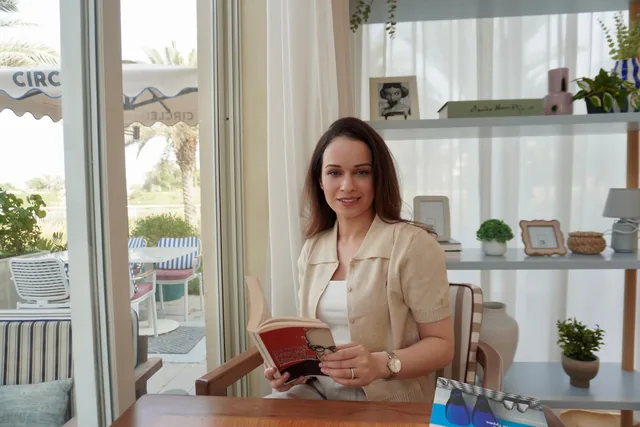
Reviewed by Komel Kaur, psychotherapist and executive coach, M.A. Psychology
Last reviewed 5 August 2026
USD 49 · both people answer
The two-sided couples tests
You each answer 44 questions privately, then get one joint report - attachment pairing, five dimensions side by side, and your three widest gaps.
Compare both tests →Free · 15 questions · you alone
Relationship doubt self-check
Scores satisfaction, doubt, repair after conflict, respect and loneliness. Instant result, no sign-up.
Take the free check →The Marriage Compatibility Test is the version built for people deciding whether to marry. It weights money, family, children, place and roles most heavily.
Read the methodology: which research each question comes from →
What the traditional process screens for, and what it misses
Arranged and semi-arranged matching is genuinely good at some things. It filters for shared background, family compatibility, education and financial stability - and those correlate with fewer external shocks in a marriage.
What it cannot see is psychological fit. Two people can be identical on paper and mismatched in the ways that determine daily life: one needs constant reassurance while the other needs space to regulate, one raises problems immediately while the other goes quiet for three days, one assumes joint finances and complete transparency while the other assumes separate accounts and privacy.
None of those come up in a meeting supervised by two families. They come up in the first year of marriage.
The questions families rarely ask directly
- How much say will each set of parents have in decisions about money, housing and children?
- Will you live with or near family, and whose family, and is that negotiable?
- Do you both want children, and on roughly the same timeline?
- Whose career moves if a good opportunity requires relocating?
- Will money be pooled and fully transparent, or partly separate?
- How is faith practised day to day in a shared home, and how will it be passed on?
- What does each of you do in the first ten minutes of a serious disagreement?
How the two-sided design protects both of you
In arranged contexts there is real pressure to give the agreeable answer, especially where families are present or a decision feels expected. Answering separately and privately removes the audience: the questionnaire is the one place in the process where each person can be accurate without managing anyone's reaction.
Neither of you sees the other's raw answers. The report carries scores, bands, gaps and readings - never a transcript. That matters most where a candid answer about family involvement or finances could otherwise be used in a negotiation.
For families and matchmakers
There is an optional shared summary designed for exactly this situation. It reports the overall picture and the broad areas that need discussion, without individual scores or answers. It is meant to reassure the people around a match that a serious compatibility step happened, while keeping each person's honesty protected.
Matchmaking services and community groups that want to offer this as a screening step can use the same summary format for every couple.
What it will not do
- It will not produce a match percentage or a verdict. Anything that does is selling certainty it does not have.
- It will not predict whether the marriage will succeed. Longitudinal research describes patterns across large samples, not outcomes for one couple.
- It will not diagnose either person with anything.
- It is not a safety assessment. Where there is coercion, threat or pressure that either person cannot refuse, that needs specialist support, not a questionnaire.
Common questions
Can a compatibility test help with an arranged marriage?
It helps with the part the process usually skips. Matching typically screens for background, education, community and family standing, all of which are external. Whether two people can talk when they disagree, whether one withdraws while the other pursues, and whether they expect the same things about money, in-laws and children are internal - and those are what this test measures.
Is it appropriate when we have only met a few times?
Yes, and that is when it is most useful. The items ask about expectations, values and how each of you typically behaves - not about a shared history you do not yet have. Couples who have met three times find the shared-direction and conflict sections the most revealing.
Will our families see the results?
Not unless you choose to share. The joint report goes to the two of you. If you want to involve family or a matchmaker, there is an optional shared summary that carries only the high-level read - no individual answers, no scores that could be used against either person.
Does it tell us whether to go ahead?
No, and any test that claims to is overselling. It gives you an accurate map of where you already agree, where you differ manageably, and where you differ in ways that will need a real decision. The decision stays yours.
Is this scientific or is it like a horoscope match?
It is built from published relationship science - attachment measurement, the Relationship Assessment Scale, the investment model, and Gottman's conflict research - and reviewed by a practising psychotherapist. Unlike horoscope matching, every item traces to a construct you can read the primary source for, and the methodology is published rather than proprietary.
We live in different countries. Can we still take it?
Yes. Each person gets a private link and answers separately in their own time. The joint report unlocks when the second person finishes.
What if the report shows serious conflicts?
Then you have found out at the cheapest possible moment. Each conflict comes with a structured conversation, and couples' sessions exist for the ones that need a third person in the room.
How much does it cost?
Start free. USD 49 once, covering both people and the joint report, is only due once both of you have answered.
How it works
Three steps, about five minutes.
No waiting list, no phone tag, no chasing a reply. You can have a time requested before you close this page, and nothing is paid until it is confirmed.
01
Pick a session and a time
Choose the session you want and a slot that suits you. Times are shown on your own clock, and evening slots are open.
02
Request it, no payment yet
Leave a few details and send the request. The slot is held for you while Komel confirms she is the right fit.
03
Confirm and get your Meet link
Komel sends a payment link for that session. Once it is paid, the Google Meet link lands in your inbox.
Sessions and pricing
Pick the session that fits, then a time.
Full session
60 minutes
USD 70USD 49
Your first session. USD 70 for sessions after that.
New client offerOne-off, no commitment
A complete therapy hour, one to one.
Book this →
Most chosen5-session plan
60 minutes
USD 49per session
Same price every time.
Save 30% per sessionNothing upfront, pay one session at a time
Five hours of real work at the lower rate the whole way through.
Book this →
Couples session
60 minutes, for two
USD 120USD 99
Your first session. USD 120 for sessions after that.
New client offerOne-off, no commitment
One hour with both partners on the same video call.
Book this →
From the practice
What Komel writes about, week to week.
When this is not the right fit
Komel is a psychotherapist and executive coach based in the UAE, working online worldwide. Sessions are private and self-funded, and cannot be claimed on local insurance or used for legal, medical or workplace reports. She does not prescribe or manage medication.
This is not an emergency service. If you are in immediate danger, use a local crisis line rather than a booking request. Her credentials and training and the full scope of practice are published.