OCI-R · Obsessive-compulsive symptoms
Do I have OCD? Free OCI-R self-test
OCD Self-Test
The Obsessive-Compulsive Inventory Revised - a free OCD self-test.
The OCI-R is a free 18-item OCD screener covering washing, checking, ordering, obsessing, hoarding, and mental neutralising, scored 0-72. A total of 21 or above is the usual cut-off suggesting an OCD assessment is worth pursuing.
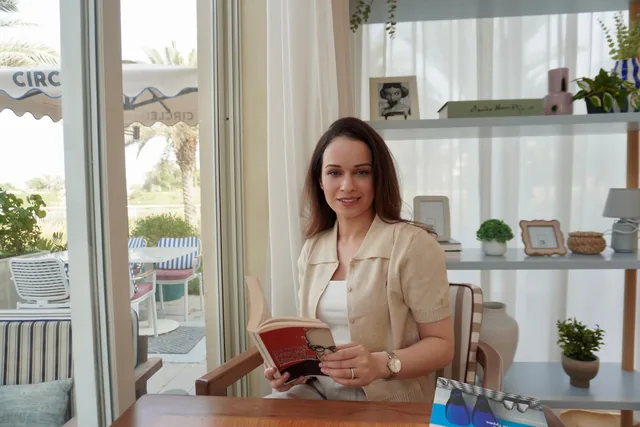
Reviewed by Komel Kaur, psychotherapist and executive coach, M.A. Psychology
Last reviewed 9 July 2026
18
Questions
~4
Minutes
Free
Always
Question 1 of 18 · start here
I have saved up so many things that they get in the way.
Pick one and the rest of the OCI-R continues on the next screen. Free, no sign-up.
What the OCI-R measures
The OCI-R (Obsessive-Compulsive Inventory - Revised) measures how much, over the past month, you have been distressed by 18 obsessive-compulsive experiences grouped into six symptom dimensions: washing, checking, ordering, obsessing (unwanted intrusive thoughts), hoarding, and mental neutralising.
Each item is scored 0-4, giving a total between 0 and 72. The dimensional structure means the OCI-R can flag which type of OCD symptoms are most prominent, not only overall severity.
Because OCD often looks very different from one person to the next - contamination fears in one, checking rituals in another, unwanted taboo thoughts in a third - the OCI-R's multi-dimensional design makes it more informative than a single-total measure.
Where the OCI-R came from
The OCI-R was published in 2002 by Edna B. Foa, Jonathan D. Huppert, Susanne Leiberg and colleagues in the journal Psychological Assessment, as a shorter, more reliable revision of the original 42-item OCI. The revision reduced item overlap between subscales, dropped the frequency scale (keeping only distress), and retained only three items per symptom dimension. Validation showed strong internal consistency and a screening cut-off of 21 producing sensitivity of 66% and specificity of 64% for OCD. It has since been translated into more than 20 languages.
How the OCI-R is scored
The OCI-R gives a total score and six subscale scores (washing, checking, ordering, obsessing, hoarding, neutralising). The conventional screening cut-off is a total of 21.
| Score | Severity | What it usually means |
|---|---|---|
| 0-20 | Below OCD screening cut-off | Symptoms unlikely to reflect OCD. Mild versions of these experiences are common and not diagnostic. |
| 21-35 | Probable OCD | Meets the standard OCI-R screening threshold. Formal evaluation and consideration of ERP therapy is recommended. |
| 36-72 | High symptom load | Substantial OCD-consistent symptoms. Specialist evaluation and evidence-based OCD treatment strongly recommended. |
How the OCI-R is used in clinical practice
The OCI-R is used in OCD specialty clinics as a screener at intake and as a repeat measure to track change during exposure and response prevention (ERP) therapy - the first-line evidence-based treatment for OCD.
Its subscale structure helps clinicians tailor ERP hierarchies. A person scoring high on washing may need different exposures than one scoring high on obsessing.
It is also used alongside the Yale-Brown Obsessive Compulsive Scale (Y-BOCS), which is the clinician-administered gold standard. The OCI-R gives quick self-report data; the Y-BOCS gives a structured clinical rating.
Limitations to keep in mind
- ·The OCI-R is a screen, not a diagnosis. Some people with OCD - particularly those with 'pure O' presentations dominated by intrusive thoughts without visible compulsions - can score below the cut-off.
- ·Symptoms overlap with other conditions: hoarding can occur in isolation, contamination fears can occur in anxiety, unwanted intrusive thoughts occur in almost everyone occasionally.
- ·It measures the past month. Presentations that wax and wane may look milder if the past month has been a quieter period.
- ·The cut-off of 21 has moderate specificity, meaning some people above the cut-off do not have OCD. A clinical interview is needed to sort this out.
How to read your OCI-R score
A score is a starting point, not a verdict. Here is what each band on the OCI-R usually means and what a reasonable next step looks like.
Below OCD threshold
Your score is below the common OCI-R cutoff. Many people experience mild versions of these patterns - it's part of being human.
Probable OCD
Your score meets the standard OCI-R cutoff for probable OCD. ERP (exposure and response prevention) is the gold-standard therapy - worth a conversation with someone trained in it.
High OCD symptom load
Your score is well above the OCI-R cutoff. OCD is highly treatable with the right therapy - please consider reaching out to a clinician who works with OCD.
What happens after a high score
A high OCI-R score does not mean something is wrong with you, and it does not confirm a diagnosis. It means the pattern you are living with is measurable, and that a trained person can help you understand it properly.
In practice, the next step is usually a conversation: someone takes your history, rules out other causes (thyroid, sleep debt, medication, grief, life circumstance), and looks at how long this has been going on and how much it is costing you. From there you decide together whether therapy, a medical review, or simply structured support is the right fit.
If you want to bring your result to someone, you can email yourself a copy at the end of the test and book an online session with Komel. Sessions are 60 minutes on Google Meet, and you can also start with a shorter 30-minute intro consultation.
Instrument and source
This page administers the OCD Self-Test (OCI-R) as published, without modification to item wording or scoring. It is reproduced here for education and self-screening, scored on your device, and reviewed by Komel Kaur, Psychotherapist.
Foa EB, Huppert JD, Leiberg S, et al. The Obsessive-Compulsive Inventory: development and validation of a short version. Psychol Assess. 2002;14(4):485-496.
Before you start
- · Find a quiet few minutes - answer honestly, not how you wish you felt.
- · There are no right or wrong answers. Pick what feels closest.
- · This is a screening tool, not a diagnosis.
- · If anything brings up something heavy, support is at the end.
Common questions about the OCI-R
What does OCI-R stand for?
OCI-R stands for Obsessive-Compulsive Inventory - Revised. It is an 18-item self-report measure of OCD symptoms across six dimensions.
What is a positive OCI-R score?
A total score of 21 or higher is the standard screening threshold for probable OCD. Higher scores indicate more severe or more widespread OCD symptoms.
Can the OCI-R diagnose OCD?
No. It is a screening tool. OCD is diagnosed via clinical interview, ideally using the Yale-Brown Obsessive Compulsive Scale (Y-BOCS) as the reference measure.
What is the difference between the OCI-R and the Y-BOCS?
The OCI-R is a short self-report screener you can complete on your own. The Y-BOCS is a longer, clinician-administered interview that is considered the gold-standard measure of OCD severity.
Can the OCI-R detect 'pure O' OCD?
Partly. The 'obsessing' subscale captures intrusive thoughts without compulsions, but pure obsessional presentations sometimes score below the total-score cut-off. If intrusive thoughts are the main problem, look at the obsessing subscale specifically.
Is the OCI-R free to use?
The OCI-R is copyrighted by its authors but is freely available for individual and non-commercial clinical use.
Reviewed by Komel Kaur, psychotherapist and executive coach, M.A. Psychology
Last reviewed 9 July 2026
Foa EB, Huppert JD, Leiberg S, et al. The Obsessive-Compulsive Inventory: development and validation of a short version. Psychol Assess. 2002;14(4):485-496.