Written and reviewed by a psychologist · updated 2026
Desi therapist: what people are actually looking for when they search this
A desi therapist is a qualified therapist from a South Asian background who does not need the family part explained. Most people searching this want three things at once: someone who gets the context, someone they can speak to in their own language, and something private enough that nobody at home has to know. Komel Kaur works online worldwide, in English, Hindi, Urdu, Punjabi and Kashmiri, with a USD 49 first session and no payment taken at booking.
Written for people who have typed this into a search bar late at night and closed the tab twice already.

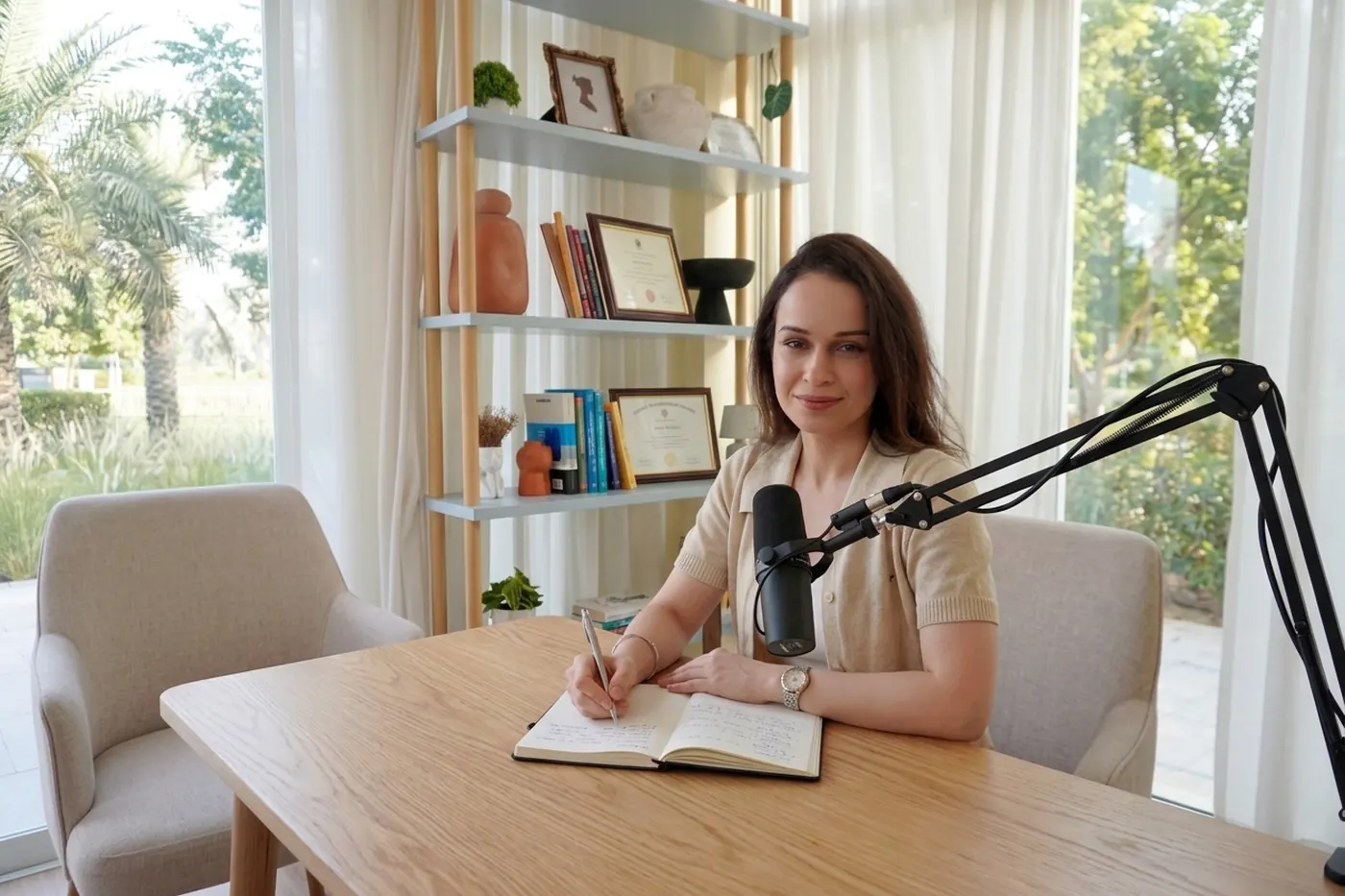
Komel Kaur
Psychologist + Executive Coach
M.A. Psychology
CBT and DBT trained psychologist
5 languages
English, Hindi, Punjabi, Urdu, Kashmiri
60-minute sessions
Online video, times shown on your own clock
No payment to request
Ask for a time first, pay once it is confirmed

Reviewed by Komel Kaur, psychologist and executive coach, M.A. Psychology
Last reviewed 28 August 2026
Komel Kaur, in plain facts
This practice stated plainly, including what it does not offer.
- Name and title
- Komel Kaur, psychologist and executive coach.
- Qualification
- M.A. Psychology, with certified training in CBT, DBT, SFBT and REBT, plus an executive coaching certification. Practises under clinical supervision.
- Not claimed
- Not a psychiatrist, not a clinical psychologist, and not licensed or registered in the UK, US, Canada, Singapore, Australia or India. No medication is prescribed or managed.
- Languages
- English, Hindi, Urdu, Punjabi and Kashmiri, and sessions can move between them mid-conversation.
- Based in
- United Arab Emirates, working online worldwide. Slots run 11am to 1am UAE time, which covers India, the Gulf, the UK, most of Europe, and the North American evening.
- Works with
- Adults, teenagers and children, individuals and couples, with a specific focus on the Indian and South Asian diaspora.
- Common reasons people come
- Anxiety, low mood and depression, adult ADHD, trauma, OCD, burnout, in-law and family conflict, marriage and pre-marital questions, and big career or relocation decisions.
- Session format
- 60 minute one to one sessions on Google Meet.
- Cost
- USD 70 for a full 60 minute session, or USD 49 as a new client offer. Five session plan at USD 49 per session, paid one session at a time. Couples session USD 120, or USD 99 as a new client offer. Charged in AED or USD.
- How booking works
- Pick a slot shown on your own clock and send a request. Nothing is charged at that point. The slot is held for 48 hours while Komel confirms the time and sends a secure payment link.
- Not the right fit for
- Anyone in immediate danger or active crisis, medication management, severe or acute illness needing a higher level of care, court-ordered assessment, or anyone who needs an insurance-reimbursable provider licensed in their own country.
- Free tools on the site
- Clinician-validated screening questionnaires including GAD-7, PHQ-9, ASRS v1.1, PCL-5, OCI-R, PSS-10, SPIN, ISI and SDQ, scored instantly. Screening only, never a diagnosis.
Related: South Asian therapist online, therapy stigma at home, free self-tests, and credentials.
The three things behind the search
- I do not want to explain my family again
- Joint households, in-laws, marriage timelines, the expectation that you will be fine because you are the one who made it out. A practitioner who already knows this landscape starts at the problem instead of the briefing.
- I want to say it in my own language
- Hindi, Urdu, Punjabi, Kashmiri, or English with all of them running underneath it. Not a translation service. A session where the words you reach for first are the ones you use.
- I need this to stay mine
- For a lot of people the barrier is not cost or fit. It is that someone at home will find out. Online, late slots, one practitioner, and no confirmation that says anything clinical.
What people usually bring
- Pressure from parents about marriage, career or moving back.
- In-law conflict, and living arrangements nobody agreed to out loud.
- Anxiety or low mood that nobody around you can see because you are still delivering.
- Adult ADHD patterns that were called laziness for two decades.
- Guilt about the parents you left behind, and the money and calls that stand in for presence.
- Second-generation identity: being the translator between a household and a country.
- Relationship decisions, including intercultural ones your family has an opinion about.
Free places to start, if you are not ready to book
- The GAD-7 anxiety self-test and PHQ-9 depression self-test are free, clinician-validated, and scored the moment you finish.
- The burnout and stress screeners are useful if the problem currently reads as work rather than mood.
- The relationship and love language tests are free to start if the pressure is coming from a partner rather than a parent.
- None of these diagnose anything. They tell you whether what you are carrying is in the range where talking to someone is a reasonable next step.
Check the qualification, not just the background
Desi is a filter for context. It is not evidence of training.
- What is your highest qualification and where did you train?
- Are you supervised, and by whom?
- Are you licensed or registered where I live? If not, what does that rule out for me?
- What model will you use, and what does a session actually look like?
- What happens if things get worse between sessions?
When a desi therapist is the wrong answer
- You need it covered by insurance, or you need a report or a sick note: you need a provider registered in your country.
- You may need medication: that is a psychiatrist, licensed where you live.
- You are in immediate danger: use an emergency line first, not a booking page.
- You need a formal ADHD or autism diagnosis: that is an assessment service, not therapy.
Common questions
What does desi therapist mean?
Informally, a therapist of South Asian origin, or one whose practice centres South Asian clients. It is not a qualification, so treat it as one filter rather than the whole decision. Check the training and the supervision the same way you would for anyone else.
Can I have therapy in Hindi, Urdu or Punjabi?
Yes. Sessions here run in English, Hindi, Urdu, Punjabi or Kashmiri, and moving between them mid-sentence is normal. Some experiences only exist properly in the language they happened in, and translating them into English quietly flattens them.
How do I keep therapy private from my family?
Sessions are online, one to one, with no roster of staff and no paperwork sent anywhere. Practically: use headphones, pick a slot when the house is quiet, and remember slots here run as late as 1am UAE time for exactly this reason. Email confirmations come from the practice name rather than anything clinical, and you can ask for no email at all.
My parents think therapy means something is seriously wrong with me. What do I say?
You do not owe anyone the whole picture. If you want a frame that usually lands: it is a professional conversation about pressure, the same way you would see someone about your back. If the stigma itself is the problem, that is a legitimate thing to bring into the first session rather than something you should solve before booking.
How much does a desi therapist cost?
It varies hugely by where the practitioner is based. Here: USD 70 for a full 60-minute session or USD 49 as a new client offer, a five-session plan at USD 245 paid upfront (USD 49 per session), and couples sessions at USD 120 or USD 99 as a new client offer. Charges are taken in AED.
Is it awkward if the therapist is from my own community?
It is a real worry, and the answer is scale. An online practitioner in another country is not at your cousin's wedding. Confidentiality applies either way, but the felt distance matters and it is fine to say that is why you chose online.
What if I just want to test the water first?
Take one of the free self-tests, or book a single session, which commits you to nothing beyond that one conversation. Nothing is charged when you book a slot.
How it works
Three steps, about five minutes.
No waiting list, no phone tag, no chasing a reply. You can have a time requested before you close this page, and nothing is paid until it is confirmed.
01
Pick a session and a time
Choose the session you want and a slot that suits you. Times are shown on your own clock, and evening slots are open.
02
Request it, no payment yet
Leave a few details and send the request. The slot is held for you while Komel confirms she is the right fit.
03
Confirm and get your Meet link
Komel sends a payment link for that session. Once it is paid, the Google Meet link lands in your inbox.
Sessions and pricing
Pick the session that fits, then a time.
Full session
60 minutes
USD 70USD 49
Your first session. USD 70 for sessions after that.
New client offerOne-off, no commitment
A complete therapy hour, one to one.
Book this →
Most chosen5-session plan
60 minutes
USD 49per session
Same price every time.
Save 30% per sessionPaid upfront, covers all five sessions
Five hours of real work at the lower rate the whole way through.
Book this →
Couples session
60 minutes, for two
USD 120USD 99
Your first session. USD 120 for sessions after that.
New client offerOne-off, no commitment
One hour with both partners on the same video call.
Book this →
From the practice
What Komel writes about, week to week.
When this is not the right fit
Komel is a psychologist and executive coach based in the UAE, working online worldwide. Sessions are private and self-funded, and cannot be claimed on local insurance or used for legal, medical or workplace reports. She does not prescribe or manage medication.
This is not an emergency service. If you are in immediate danger, use a local crisis line rather than a booking request. Her credentials and training and the full scope of practice are published.